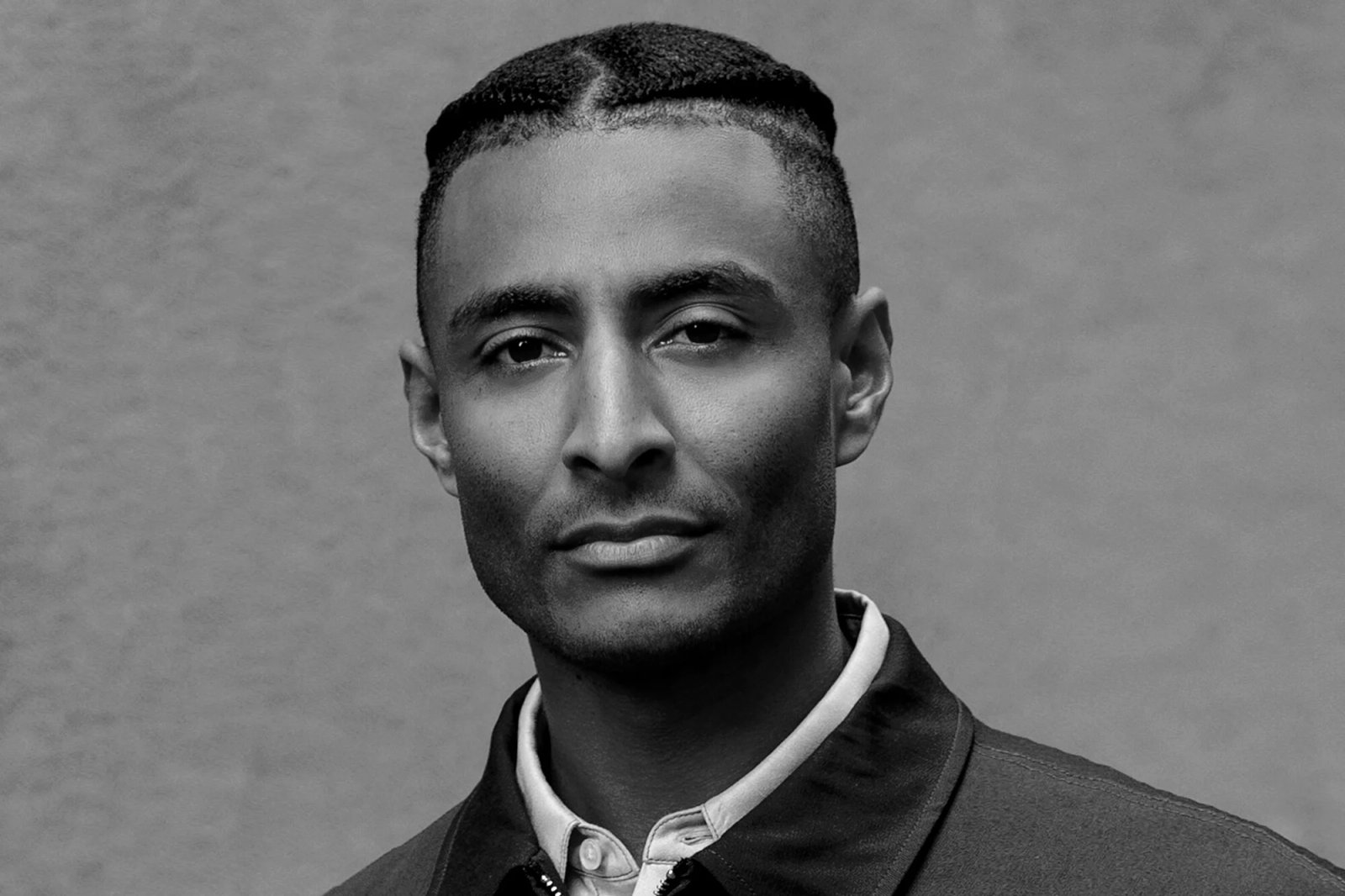
What Jayden Ali wants to see in Best of Design submissions
When he was still an architecture student, London-based Jayden Ali redesigned a primary school for boys with complex behavioral needs. The project, dubbed The Barn, was completed before Ali officially started his own design studio, JA Projects.
Since formalizing the studio for art, architecture, and urban strategy in 2017, Ali has worked on projects for London’s V&A Museum, Nike, the British Pavilion at Biennale Architettura 2023, and the Cooper Hewitt, Smithsonian Design Museum for the exhibition Design Across Time: Exploring the Smithsonian’s Design Collection.
Now, he serves as a London Mayor’s Design Advocate, Dean’s Visiting Professor at Columbia University GSAPP, and as a juror for AN’s 2026 Best of Design Awards. Read on to hear about his unique approach to the practice and the types of project he’s looking for in Best of Design submissions.

AN: You’ve used the term “architecture plus” to describe your work. Can you unpack what it means and how you arrived at it?
Jayden Ali (JA):I’m a big believer in architecture—and the world we live in—being constructed of both material things and immaterial constructs. That means we’re interested in buildings, but also in the things that are often more fleeting, light-touch or ephemeral, and which contribute just as much to our reading of space and place: rituals, foods, greetings, sounds and smells. Ideas of welcome, belonging and empowerment, and the feelings associated with all of those things, are really important to JA Projects.
The idea of “architecture plus” is about working with the core of the architectural discipline— buildings and physical space—while also looking beyond it.
I arrived at that position because I’ve always been interested in the way the city is made, and particularly in the ways certain communities commandeer it, claim space, and make space for themselves and others. I grew up in the pirate radio generation, so I always understood what it meant to project your truth across the airwaves. To me, that form of sonic and communal construction and building can be as valuable as bricks and mortar.
AN: How do you integrate this idea? How does it benefit your design and practice?
JA: I’m really interested in building a team of people who are inspired by the projects we’re lucky enough to work on, and who also have their own interests and pursuits outside the studio. For the most part, we operate Monday to Thursday, and most of the team use their Fridays to pursue those other interests.
I think that space is really important. Conventional architecture can be relatively slow, and there needs to be room outside of it to immerse yourself in ideas, practices and pursuits that you find personally interesting and inspiring and that can be tested quickly. The studio really benefits from that outlook, because it keeps us connected to the world and prevents us from becoming too hegemonic in the way we think. It also allows us to stay abreast of developments and innovations, whether technical, cultural or social.
We have people who spend time in academia, people who are community gardeners, people who run festivals, and people who are ceramicists. They bring theories, new ways of empowering communal practice, new thinking around ephemeral and temporary architecture, and new approaches to craft and making back into the studio. I think that creates a very vibrant space to foster and incubate ideas.

AN: Your work often considers overlooked or unconsidered experiences, like Finsbury Park High Street Lab, which considers the safety and experiences of women and gender-diverse people at night; or V&A East Museum’s Why We Make galleries, which takes into consideration the perspectives of young people in institutions. How do you design with overlooked experiences, particularly those that aren’t yours, in mind?
JA: The first thing is to consider the makeup of the team. We have to make sure there is an affinity and solidarity among the people working in the practice with the ambitions and experiences of those who have historically been more peripheral.
That solidarity is absolutely key. Our lived experiences don’t have to be the same as those of the communities we are trying to bring into the process. We do, however, need the sensitivity to acknowledge their conditions and lived experiences, and the ability to listen.
Our more outward-facing and community-focused projects often begin with a process of listening. We have lots of one-on-one conversations and are committed to spending significant time on site and understanding a particular context. That is critical to building trust.
We then structure projects around cyclical rounds of dialogue. Sometimes that dialogue is individual, sometimes peer-led, and sometimes collective. It can be formal and structured, or more incidental and encouraged through performance and other activities.
We’re always thinking about how people who don’t have a specialist lexicon around architecture or city-making can engage meaningfully with the subject. That means finding common ground for a conversation. We’ve found that collective meals, artistic workshops, and performances can be very effective gateways into wider discussions about what it means to inhabit a place, what people want from it, and how they see themselves reflected and supported within it.
AN: What are you currently working on?
JA: We’ve just delivered the permanent gallery design for the Smithsonian’s Cooper Hewitt in New York.
Our traveling exhibition for Nike, Form Follows Motion, which was developed in partnership with the Vitra Design Museum, is opening at the Museum of Arts and Design in New York in mid-September. We also have another exhibition, Sunday Best, opening at the Art Gallery of Ontario in Toronto in mid-October.
In London, we are responsible for the redesign of Piccadilly Circus, working within a team led by Allies and Morrison. We’re also designing the permanent gallery spaces for the Fashion Museum Bath, a seminal historic fashion collection that is being rehoused in a new home.
Alongside that, we’ve recently delivered new social housing in South London and are working on a number of housing and mixed-use projects across the capital, including major town-center projects in parts of the city that have historically been underinvested in but are incredibly culturally rich.
AN: What types of projects do you want to see in Best of Design submissions?
JA: I want to see projects that have a spatial elegance to them and a clear social purpose. I’m particularly interested in projects that innovate infrastructurally and think beyond bricks and mortar to consider the ways people gather, come together, are supported and are acknowledged.
Architectural elegance has historically been found in the coming together of different material elements—in a beautiful junction, for example. I’m interested in projects that apply a similar degree of care to the junction between social and spatial conditions.
I want to see work that composes those relationships elegantly.
AN: What advice do you have for those submitting to Best of Design?
JA: I’m interested in projects that represent part of someone’s ongoing inquiry, where you can understand the submitted work as a moment within a broader trajectory of thinking and practice.
I would encourage applicants to be explicit about the ways their work contributes to collective life in the round, and equally explicit about how the project pushes their own inquiry and practice forward.
Best of Design submissions are open now through September 18, 2026 (midnight ET). Learn more and submit here.