
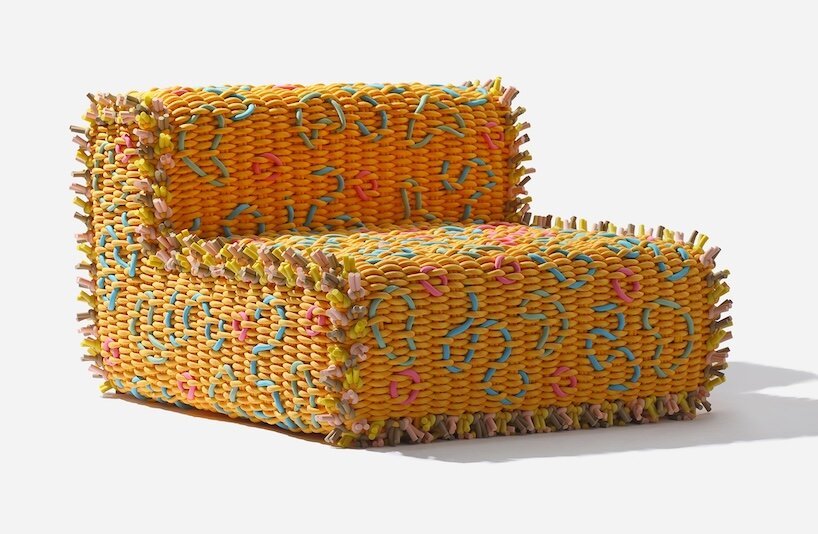
three london designers rethink the materials that shape our homes
MAX LAMB PUSHES CERAMIC BEYOND TABLEWARE
Master of unconventional materials, designer Max Lamb’s latest collection, “Crockery”, rethinks the familiar notion of ceramic, being a fragile and delicate material, with a series of chairs crafted from stoneware. The designer collaborated with 1882 Ltd, a ceramics manufacturer based in England’s historic pottery region of Stoke-on-Trent, to develop a collection of dining chairs made entirely of clay. Here, earthenware moves beyond the realms of tableware and into furniture, supporting the presence of the human body.
“Crockery” is a collective undertaking, with 23 potters involved in the production of each chair, every stage of the meticulous process requires a fine balance of specialist knowledge and collaboration. From preparing and releasing the molds to drying and firing, the process is shared across a community of makers. This ethos of collective production is central to Lamb’s work, as material experimentation thrives under the culture of making. The resulting chairs occupy a space between sculpture and furniture, bringing craft into the domestic environment in unexpected forms. Lamb’s chairs celebrate not only the possibilities of ceramic, but the people, processes and shared knowledge involved in the production of design.
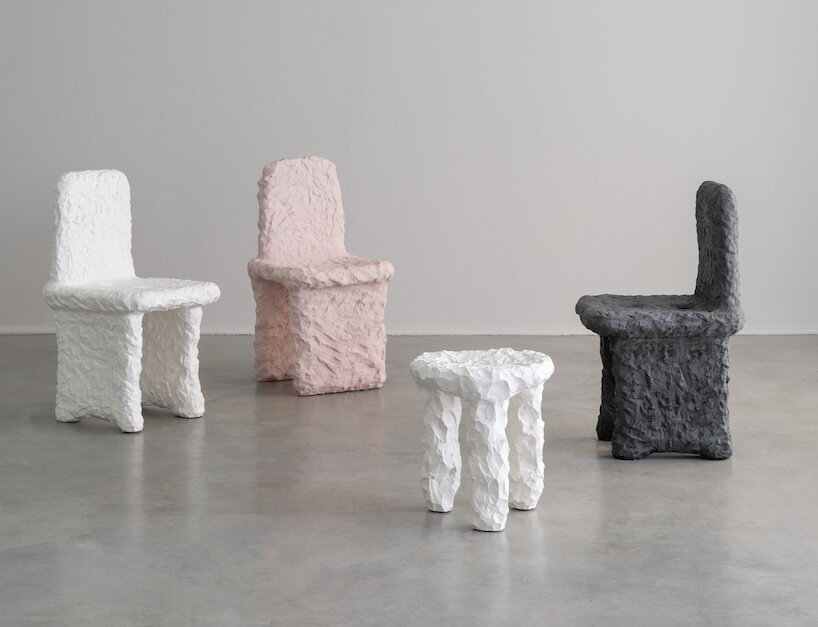
Max Lamb’s ‘Crockery’ collection transforms stoneware into sculptural seating | image: courtesy of Gallery Fumi
ANDU MASEBO BRINGS AUTOMOTIVE MATERIALS INDOORS
Meanwhile, Andu Masebo’s Tubular Chair begins with another act of reappropriation: materials normally found on a car are reimagined in the context of the home. Sourced from London’s mechanic and exhaust workshops, stainless steel tubes normally used for car exhaust systems are transformed into chairs with voluptuous, curving frames, while recycled chip rubber becomes a soft, tactile seat.
Working closely with exhaust manufacturers, Masebo adapted the limitations of their machinery into an opportunity for invention, bending and joining two sections of tube to create the chair’s distinctive silhouette. The finished seat embraces its industrial origins, down to the deliberately exposed welded joins, which are celebrated rather than concealed.
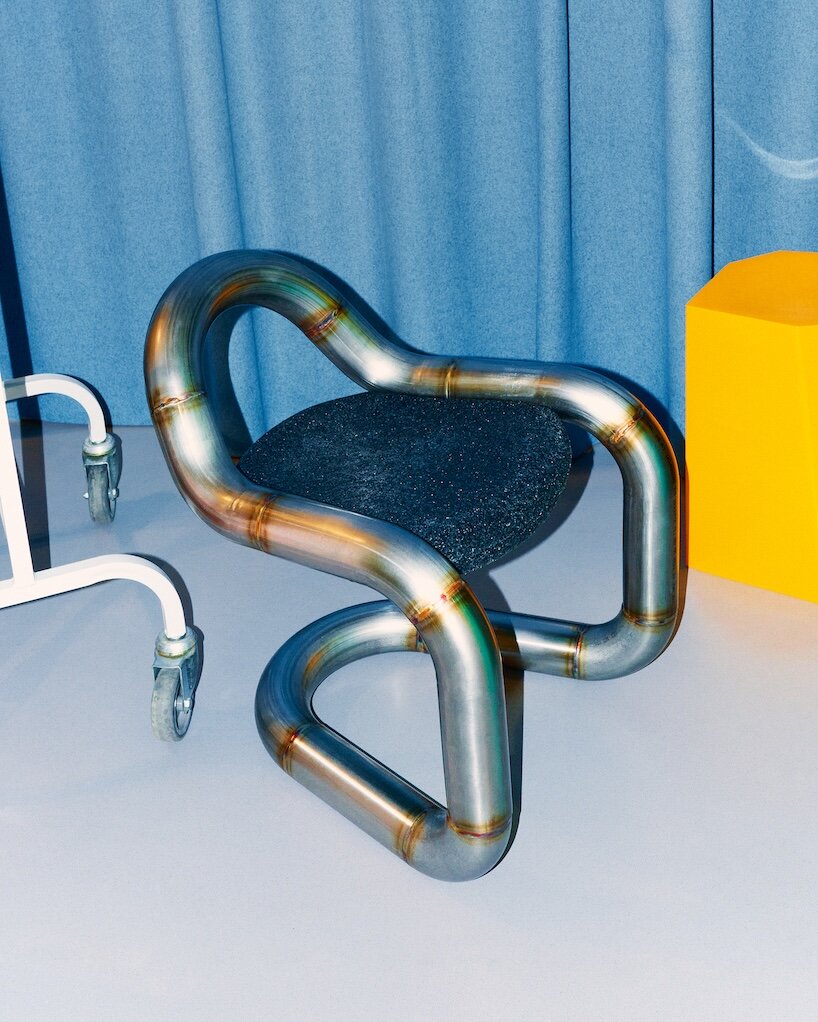
Andu Masebo reimagines automotive materials through his Tubular Chair
LEAVING DOMESTIC CONVENTION AT THE DOOR
Across the distinct work of each designer, there is a shared refusal to follow the prescribed language of domestic furniture. Materials are recontextualized and familiar forms are disrupted in objects that question our assumptions about what the home should be made from. There is a sense of liberation to be found in approaching the home as a place for experimentation, humor and surprise. In this version of domesticity, convention can be left at the door.
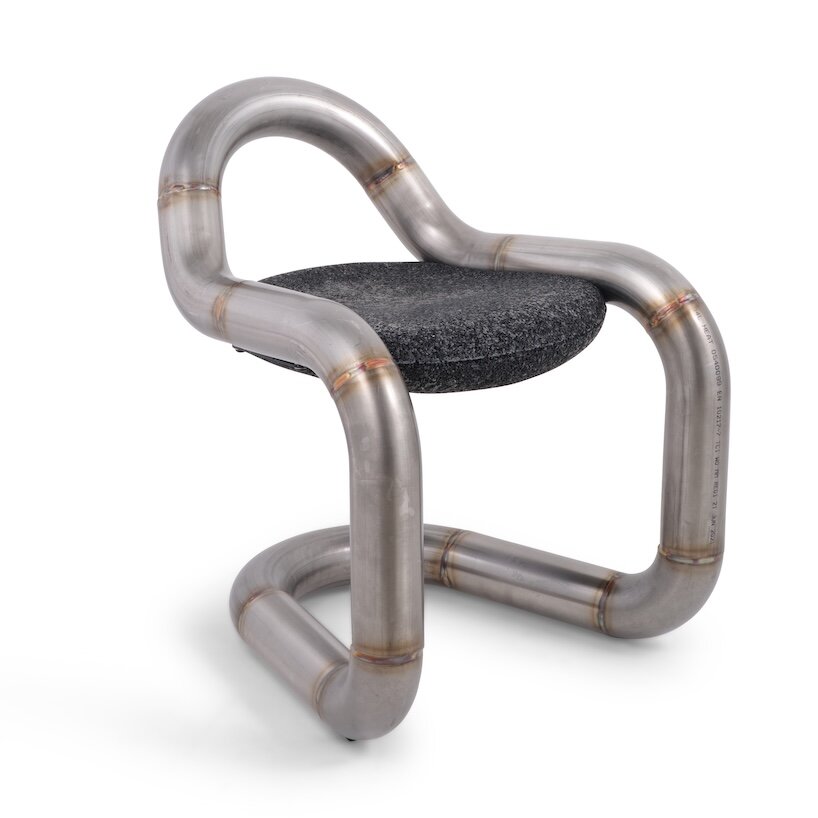
Andu Masebo’s design combines stainless steel exhaust tubing with recycled chip rubber | image: Yeshen Venema