Lorcan O’Herlihy dies at 66
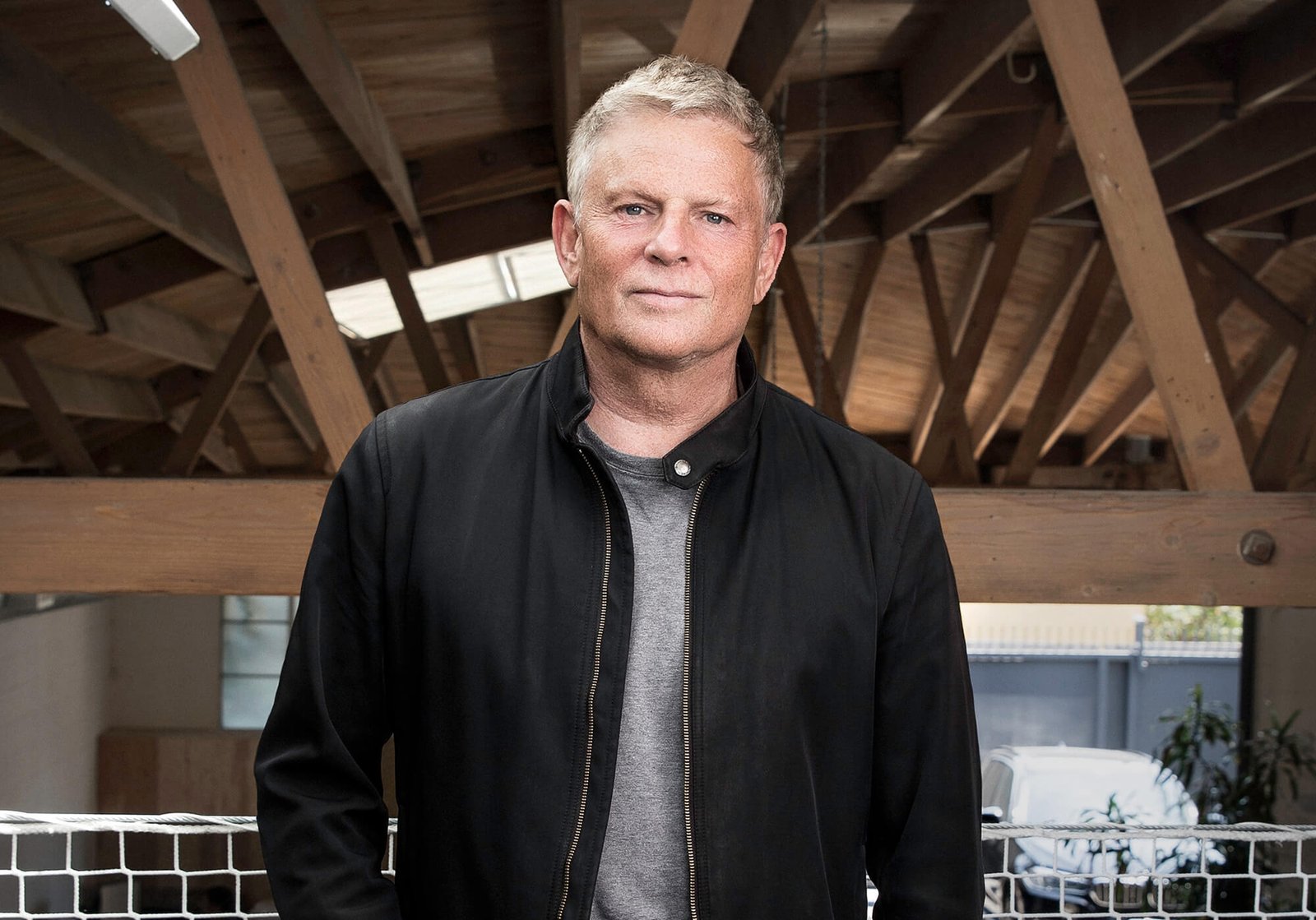
Lorcan O’Herlihy died on June 14, 2026, at age 66. His death was confirmed by Lorcan O’Herlihy Architects (LOHA). The cause of death was glioblastoma.
O’Herlihy always had a stylish independent streak. From his earliest days in architecture, he exuded an artistic energy as well as a certain raffish charm in his interactions with the culture and practice of architecture.
It is indicative of O’Herlihy’s character that he took time out from his normative professional development in the mid-1980s to dedicate himself for a period to painting. It was surely at the Holl office that he subsequently encountered a plausible model for the kind of architect he wished to be: creative, critical, and sometimes a little restless.
Lorcan O’Herlihy was born in Dublin, Ireland, in 1959. His father, Dan, had trained as an architect at University College Dublin before quickly establishing himself as a dramatic actor in such films as Carol Reed’s Odd Man Out (1947) and Luis Buñuel’s Robinson Crusoe (1954). O’Herlihy spent his childhood traveling to cities around the world for his father’s acting roles. This artistic Irish American milieu—a Dublin–Malibu axis long before U2—was important for Lorcan, yet the younger O’Herlihy was also always keen to be his own man.
O’Herlihy earned an architecture degree from Cal Poly San Luis Obispo in 1981. He worked first for Kevin Roche/John Dinkeloo & Associates in Connecticut and then for I. M. Pei and Partners and Steven Holl Architects in New York before establishing his own practice, Lorcan O’Herlihy Architects (LOHA), in Los Angeles in 1994.
As documented in his 2020 publication Architecture Is a Social Act, LOHA has pursued a distinctive path in the context of Southern California. Notable achievements grew in scale from bespoke residences in West Los Angeles to multi-unit apartment buildings and cultural facilities across L.A. before the scope expanded again in recent years to other U.S. cities.
O’Herlihy exhibited a vivid painterliness in his composition of architectural form. He also certainly liked color. Witness his Big Blue Bus Stops for Santa Monica. Or the vivid red Formosa1140, his 11-unit apartment building with its pocket park. (Models and drawings of this project are now in the collection of the Heinz Architectural Center in Pittsburgh.) This and other projects resulted from a productive relationship with Richard Loring as developer and with the late John Chase as urban designer for the City of West Hollywood. “Formosa was one of those projects where when I show it to people they’re just stunned, whether it’s in person or pictures, because it kind of looks like a painting more than a building,” Loring said.

LOHA’s Habitat825, a 19-unit apartment building immediately next to R. M. Schindler’s 1922 double house in West Hollywood, is white and black and lime green. Its cubic or Cubistic massing was a harbinger of larger subsequent projects such as SL11024, where lime green is dominant, across from Richard Neutra’s 1937 Strathmore Apartments; and then the 190-unit, mixed-use development with steel-blue and gunpowder-grey checkerboard facades, a collaboration with SOM, on Sunset and La Cienega.
LOHA’s commitment to affordable housing was signaled in 2011 by the refurbishment of a storage building as offices for the Skid Row Housing Trust. The MLK1101 Supportive Housing placed 26 residential units about an upper patio with a crystalline pavilion as community room and a cascading stair to the street. The same nonprofit developer, Clifford Beers Housing, was also responsible for Isla Intersections, a 54-unit project on an unlikely, attenuated site near the intersection of the 110 and the 105.

After meeting with success in L.A., O’Herlihy surprised some observers by turning in part his attention to the home of General Motors and Motown, proof, surely, that O’Herlihy—who could easily have enjoyed a pleasant life accommodating lives of the Rich and Famous in L.A.—was committed to an impactful professional role in the future of American cities.
For the Brush Park neighborhood with its Victorian fabric and urban decay, LOHA developed a strategy with Dan Gilbert’s Bedrock company to reinforce the corner lots of urban blocks with new stepped monoliths each clad in a single material (brick, wood, metal). The practice then studied a large, strategic site known as Milwaukee Junction designing the 138-unit Baltimore Station with a chasm-like courtyard and an exterior cloak of undulating metal modelled on suave automobile bodywork.

The last time I saw Lorcan was in Dublin. He had just taken his two teenage sons out to Dalkey to view the house in which he and his siblings had grown up. Some years earlier, he had completed his first building in his home country, the Flynn Mews, a beautiful and spatially rich home in a historic mews lane.
O’Herlihy was artistic yet also clearly dedicated to the urban potential of each proposal. He become an advocate for L.A.—and later Detroit—to become a more humane and inclusive city. He taught for years at USC and earned over 200 design awards.
In March, LOHA announced a radical restructuring with the elevation of seven colleagues to director, senior associate, and associate roles in the practice.
O’Herlihy is survived by his beloved wife Cornelia Hayes O’Herlihy, also an actor, and their twin sons, Daire and Darcy. His funeral will take place in Glencar, Ireland. His life and work made an impact that family and colleagues can take pride in—hard work and talent applied to the construction of a vital environment for all.
Raymund Ryan is curator-at-large at the Heinz Architectural Center at Pittsburgh’s Carnegie Museum of Art.