
For Dyani White Hawk, Love Is an Act of Resistance
Art Review
Her exhibition “Love Language” invites viewers into the vibrant cultural legacies of Native art, and connections to land, lineage, and community.
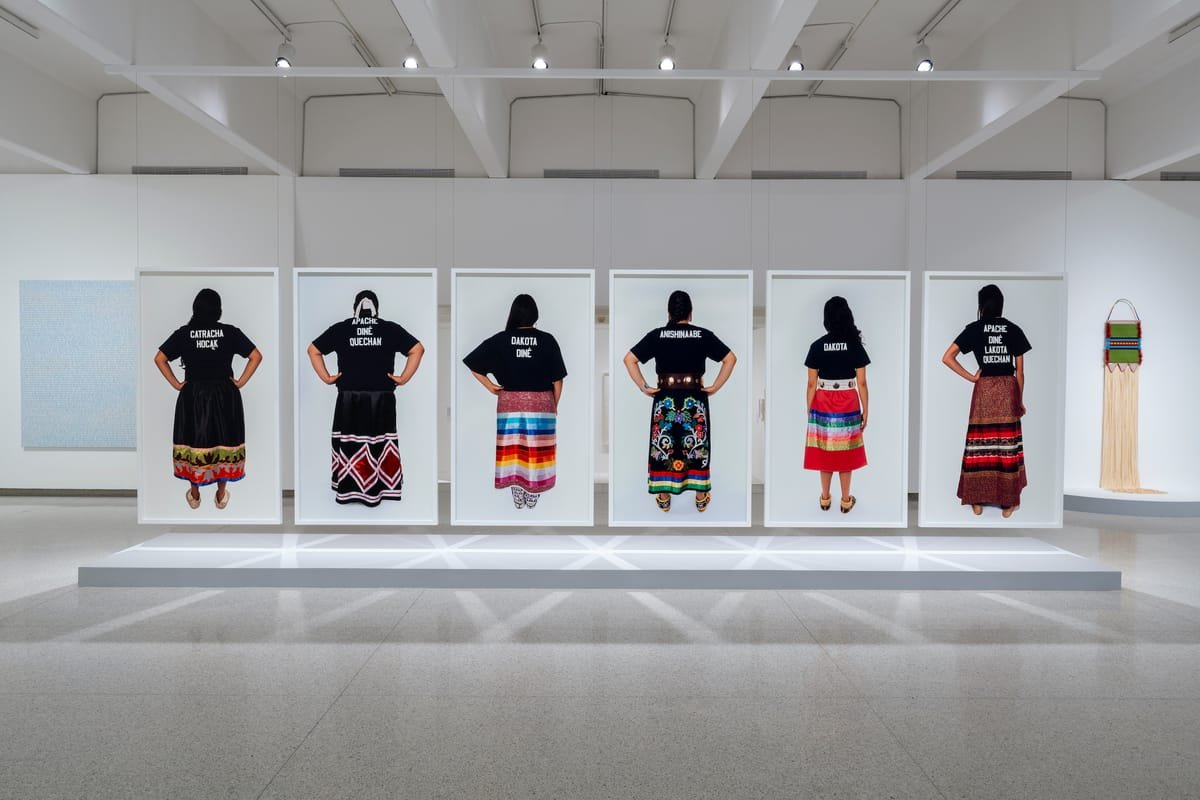
Installation view of Dyani White Hawk: Love Language at the Walker Art Center. Pictured: back view of “I Am Your Relative” (2020) (photo Eric Mueller, courtesy Walker Art Center, Minneapolis)
MINNEAPOLIS — Infinite love abounds in Dyani White Hawk’s (Sičaŋǧu Lakota) solo exhibition, Love Language, at the Walker Art Center. The work of the Minneapolis-based artist and 2023 MacArthur Fellow imbues a space rarely afforded to local creators with a deeply rooted Indigenous perspective. Organized in four thematic sections — See, Honor, Nurture, and Celebrate — these collectively serve as both artistic imperatives and ethical calls to action.
See invites viewers into the vibrant cultural legacies of Native art, while Honor delves into enduring connections to land, lineage, and community. Within the Nurture section are cozy couches with throws and pillows designed by White Hawk and produced by nearby Fairbault Woolen Mills, as well as the video series Listen — 10 monitors paired with headphones that amplify the voices of Indigenous women speaking in their native languages while surrounded by their ancestral lands.
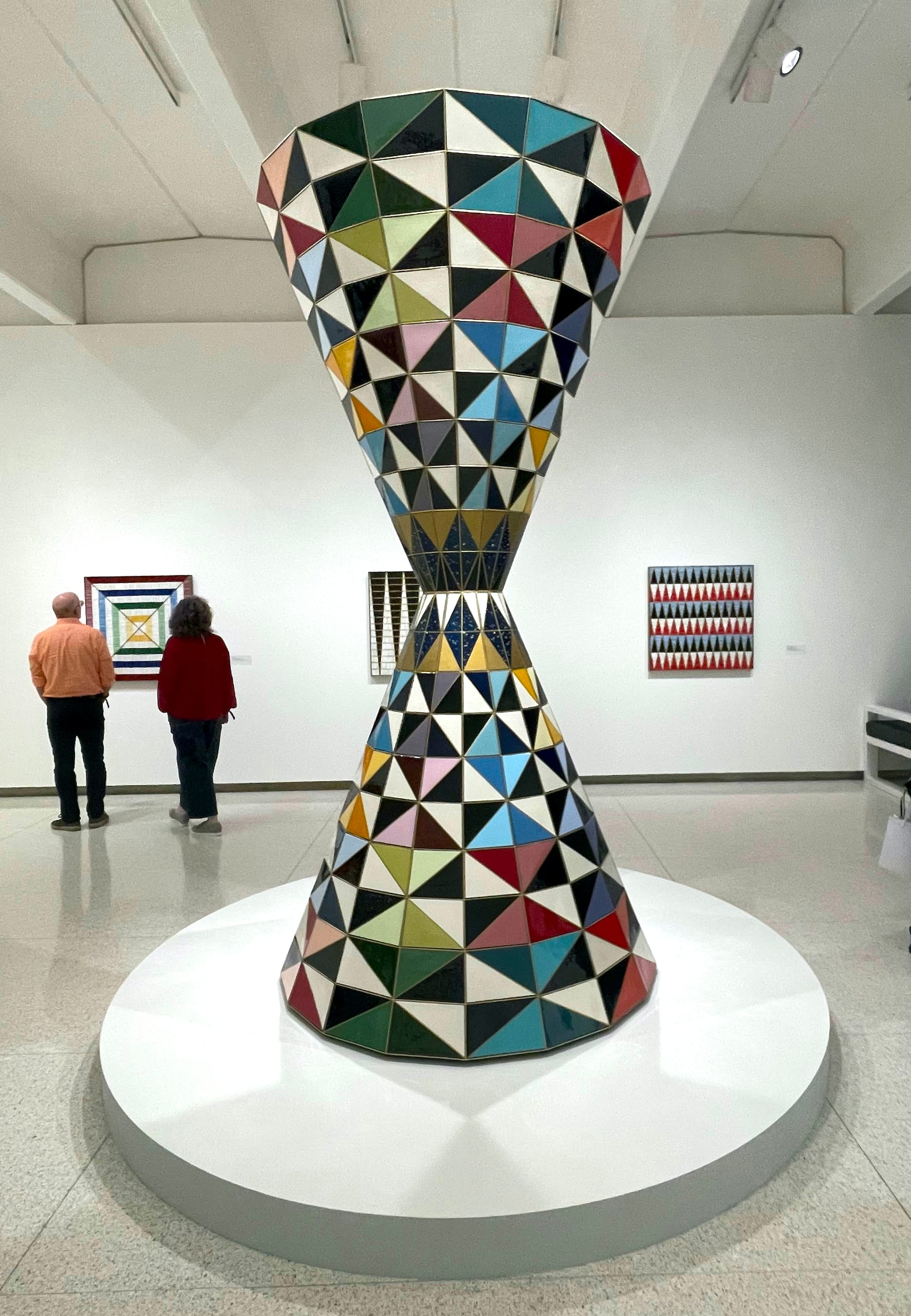 Installation view of “Infinite We” (2025) in Dyani White Hawk: Love Language at the Walker Art Center (photo Sheila Dickinson/Hyperallergic)
The kapémni design, an X shape formed from two triangles that meet at the tip, is a foundational Očeti Šakowiŋ (Lakota, Dakota, and Nakota) design, and is central to White Hawk’s practice. It symbolizes the point of connection between the cosmological spiritual world and the earthly world, as well as the balance between humans and nature. The concept and form are monumentally explored in the artist’s 10-foot sculptural kapémni tower, “Infinite We” (2025), a conical hourglass form composed of triangular ceramic tiles in warm, vibrant hues with gold grout, and midnight blue tiles with star-like specks that form diamonds at the center.
Another standout work, in the Celebrate section, is the epic, wall-sized canvas “Wopila/Lineage,” originally commissioned for the 2022 Whitney Biennial. Expansive and generous, the work is crafted from thousands of shimmering glass bugle beads, reflecting both light and the collective labor of its creation. White Hawk gathered family and BIPOC community members to help string beads. This repetitive task mimics the repetition of the kapémni motif, which seems to continue beyond the framed barrier of the canvas in perpetuity.
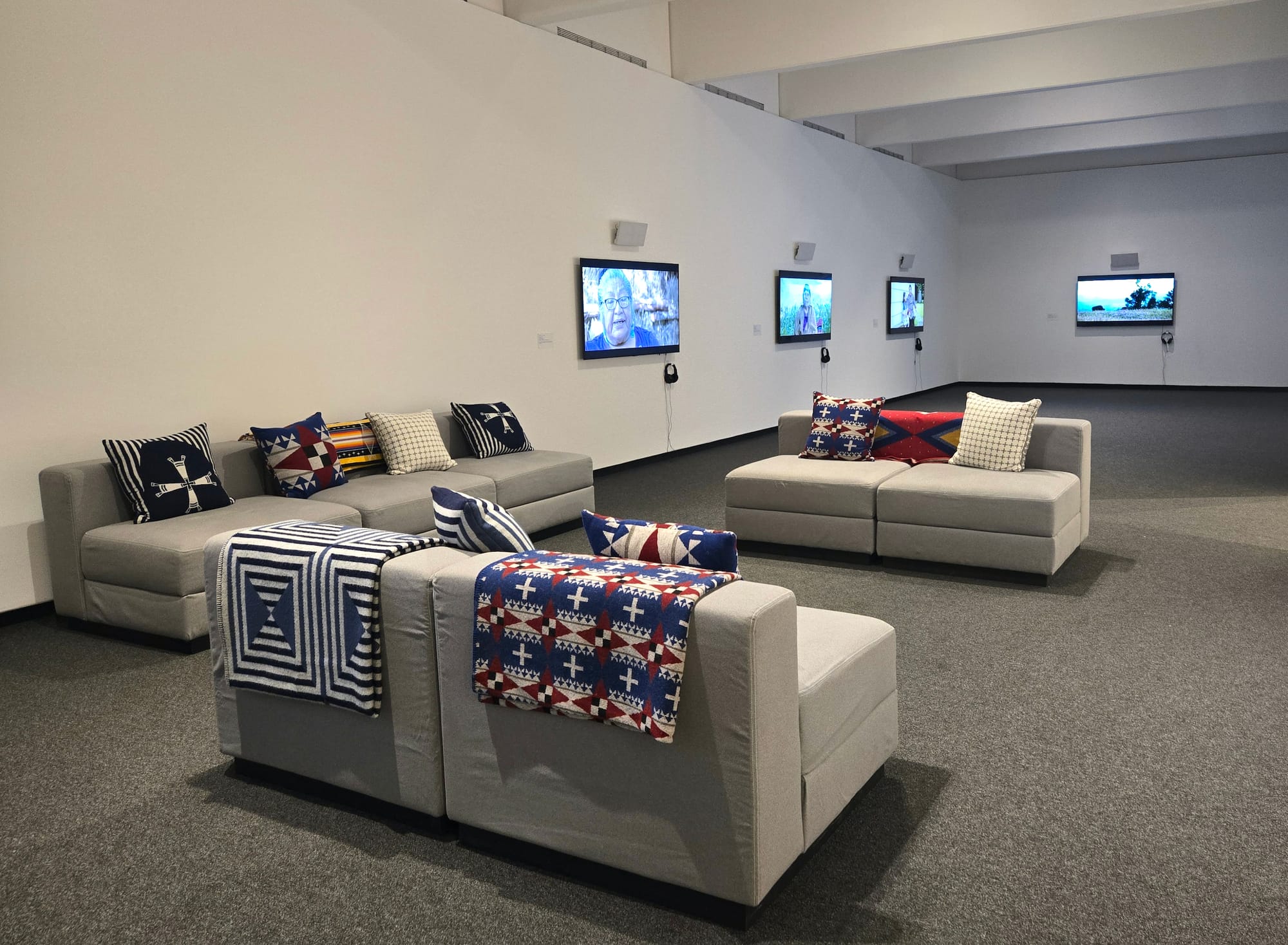 Installation view of the Nature section in Dyani White Hawk: Love Language at the Walker Art Center (photo Sheila Dickinson/Hyperallergic)
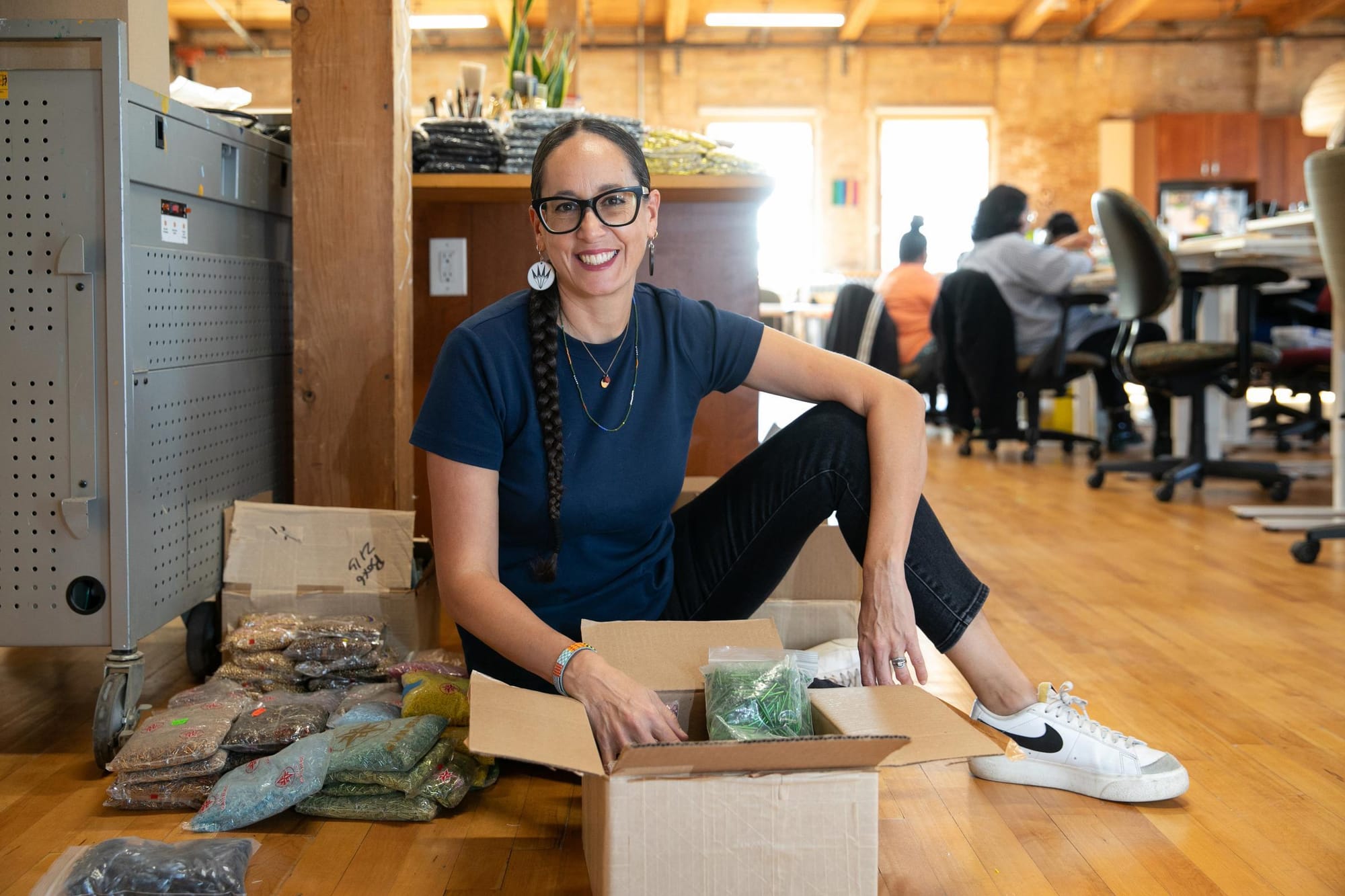 Dyani White Hawk in her Minneapolis studio (photo © John D. and Catherine T. MacArthur Foundation)
The Walker’s institutional messaging around Love Language and its curation foreground inclusivity, welcoming, learning, and creating positive connections. These efforts include Lakota/Dakota language training for staff, audio guides with commentary by Native voices, and a three-hour opening ceremony at the Walker featuring a drum circle and speakers from the Indigenous community, such as the artist’s mother, author Sandy White Hawk. By offering this embodied cultural experience to residents and visitors to the Dakota and Anishinaabe land of Mni Sota Makoce (Minnesota), the Walker demonstrates how far it has come since Sam Durrant’s “Scaffold” was dismantled in 2017. That controversy left regional Native communities feeling betrayed and ignored, but it also prompted tough, necessary conversations at the Walker and in the art world more broadly, thus laying the groundwork for this exhibition.
As part of the Walker’s focus on Minneapolis-based Native artists, A:gajë:gwah dësa’nigöëwë:nye:’ (i hope it will stir your mind), the first of two major works by transdisciplinary artist Rosy Simas (Seneca Nation of Indians, Heron clan), opens at the museum on February 12, commissioned as part of a two-year residency.
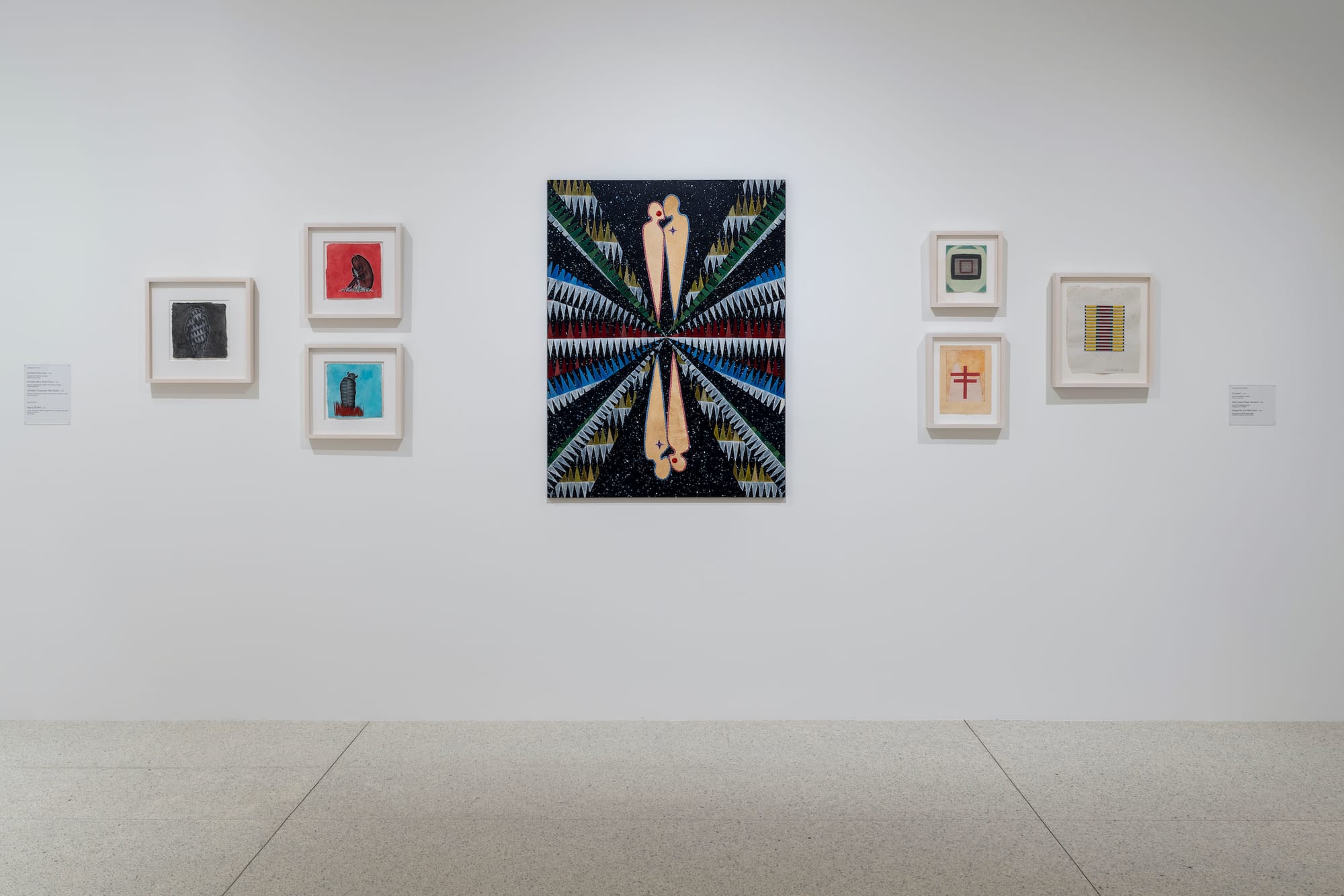 Installation view of Dyani White Hawk: Love Language at the Walker Art Center (photo Eric Mueller, courtesy Walker Art Center, Minneapolis)
In the last few weeks, Love Language has become a sacred refuge for those of us coping with the current crises in Minneapolis — a city marked by racial reckoning and collective power. With ICE roaming the streets in militarized masked gear, we need this exhibition now more than ever. For residents and the hundreds of visiting journalists, faith leaders, and activists enduring the cold and helping local immigrants, the exhibition offers a space for healing — a reminder that Indigenous resilience persists in everyday acts of collectivity.
A visual and conceptual milestone, the exhibition — which travels to the Remai Modern in Saskatchewan next — serves as a blueprint for ethical curation, one that centers Indigenous voices without diluting their complexities.
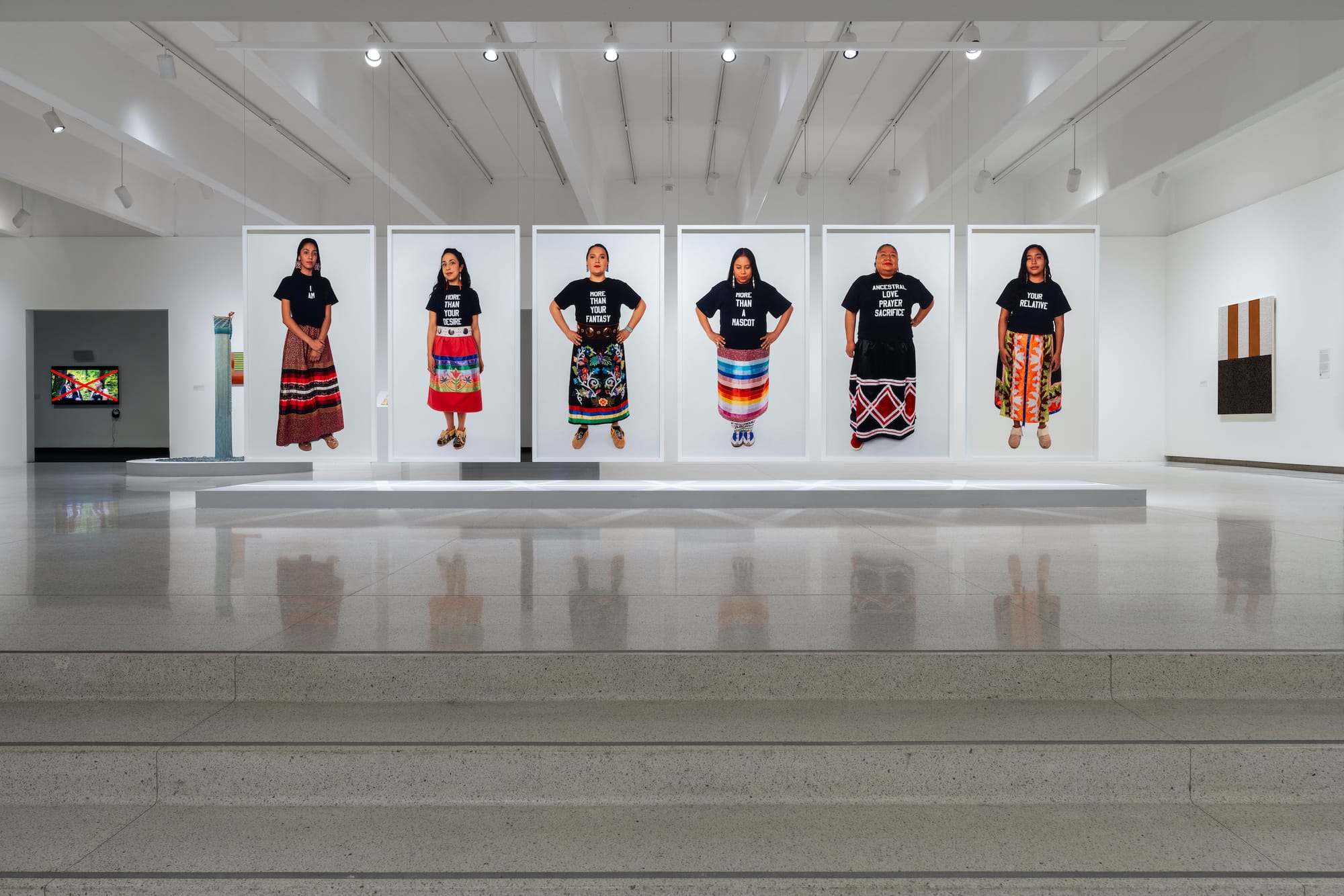 Installation view of Dyani White Hawk: Love Language at the Walker Art Center. Center: front view of “I Am Your Relative” (2020) (photo Eric Mueller, courtesy Walker Art Center, Minneapolis)
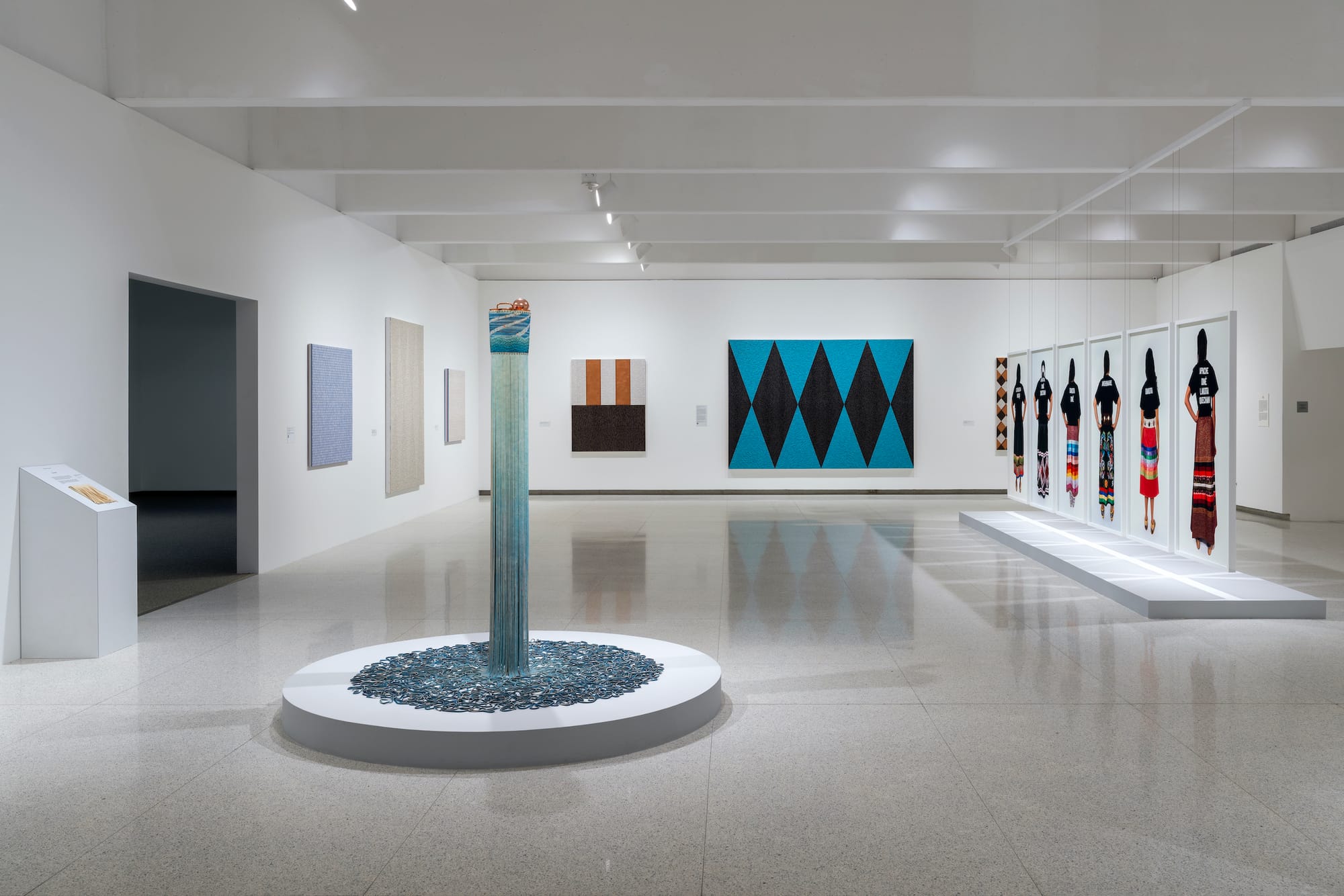 Installation view of Dyani White Hawk: Love Language at the Walker Art Center (photo Eric Mueller, courtesy Walker Art Center, Minneapolis)
Dyani White Hawk: Love Language continues at the Walker Art Center (725 Vineland Place, Minneapolis, Minnesota) through February 15. The exhibition was curated by Siri Engberg and Tarah Hogue (Metis), with support from Brandon Eng, curatorial assistant.
It travels to the Remai Modern in Saskatchewan, Canada, on April 25.
🔗 Source: Original Source
📅 Published on: 2026-01-28 00:47:00
🖋️ Author: Sheila Dickinson – An expert in architectural innovation and design trends.
For more inspiring articles and insights, explore our Art Article Archive.
Note: This article was reviewed and edited by the archot editorial team to ensure accuracy and quality.


