A Light-Filled Extension Wrapped in Dark Brick
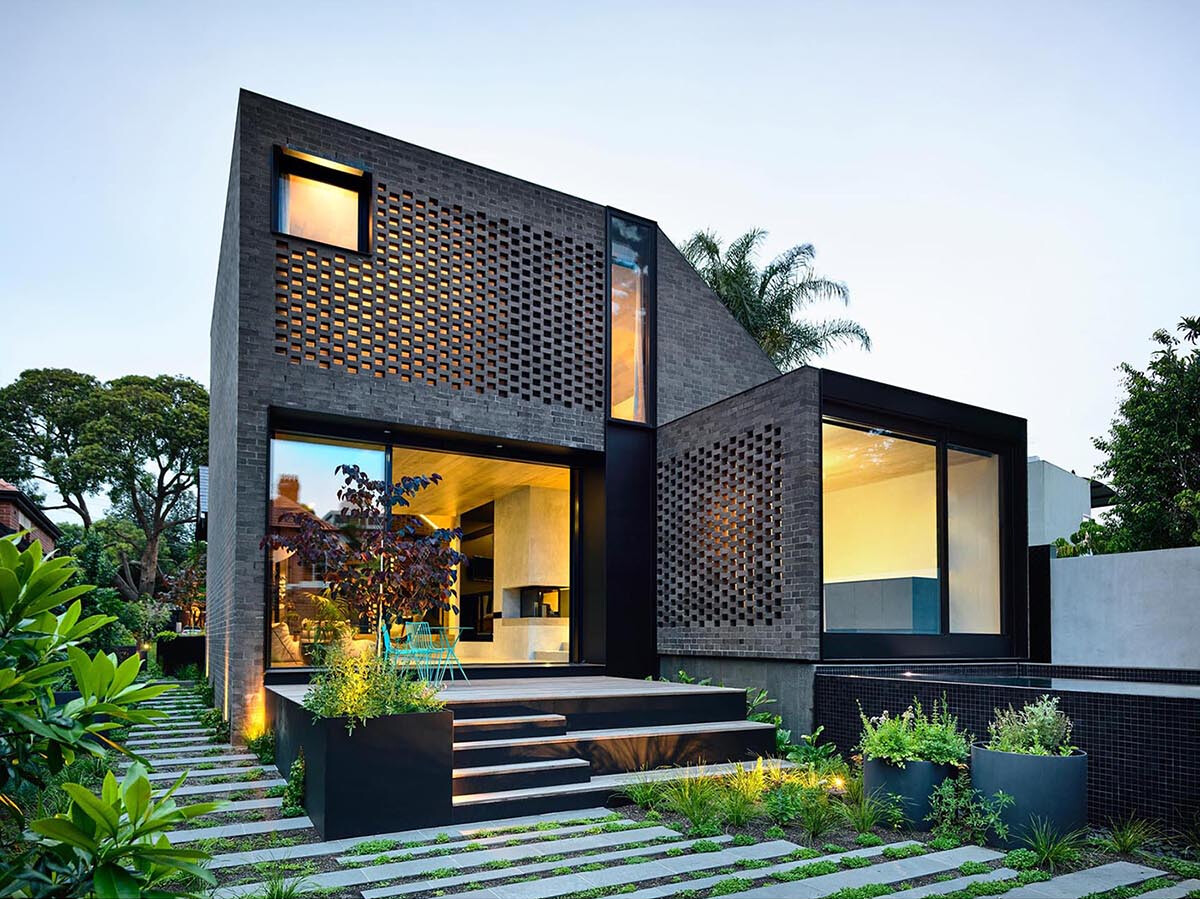
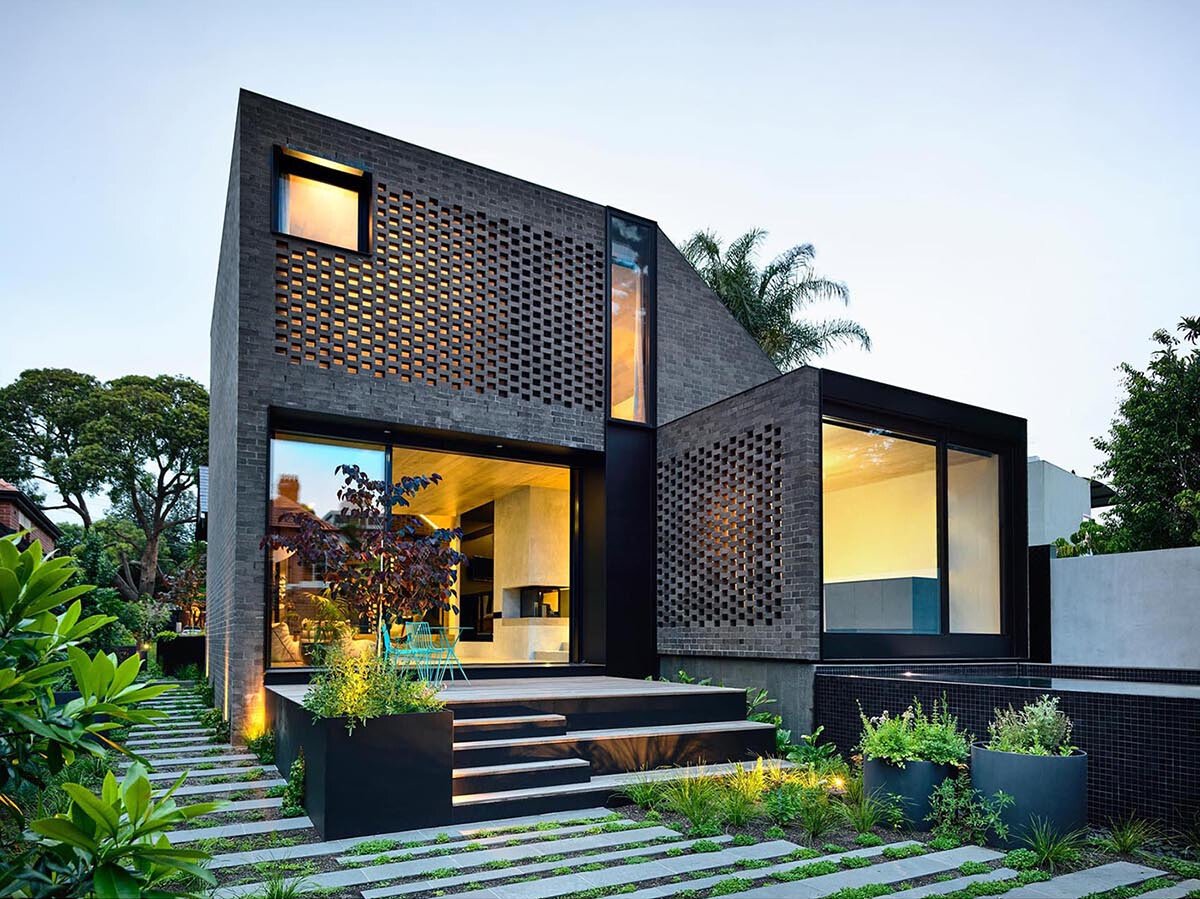
Australian architecture firm Jackson Clements Burrows (JCB) reworked an existing heritage home in Melbourne, introducing a modern two-storey addition that shifts the entire feel of the property. The project keeps the original structure intact while adding a distinct new volume that reflects a more contemporary approach to form and materials.
A Dark Material Palette That Plays with Light
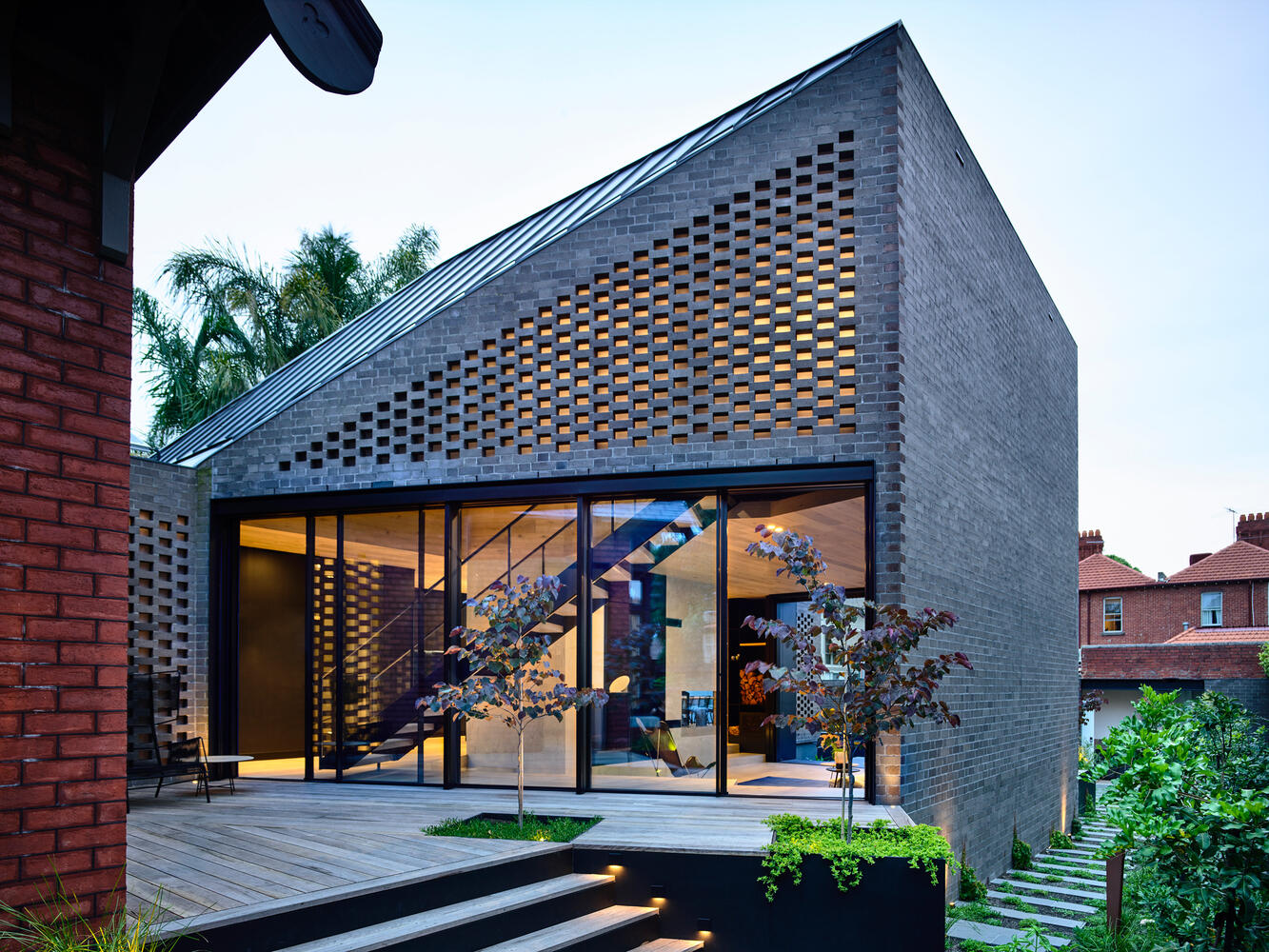
The new addition introduces a refined palette of dark brick, steel, and timber, giving the home a strong and contemporary identity. Despite the darker tones, the design doesn’t feel heavy. Large windows and carefully placed openings allow natural light to move through the structure, softening the materials and highlighting their textures.
The brickwork filters light in subtle ways, creating shifting patterns throughout the day while maintaining privacy and visual depth.
Interior Details That Tie Spaces Together
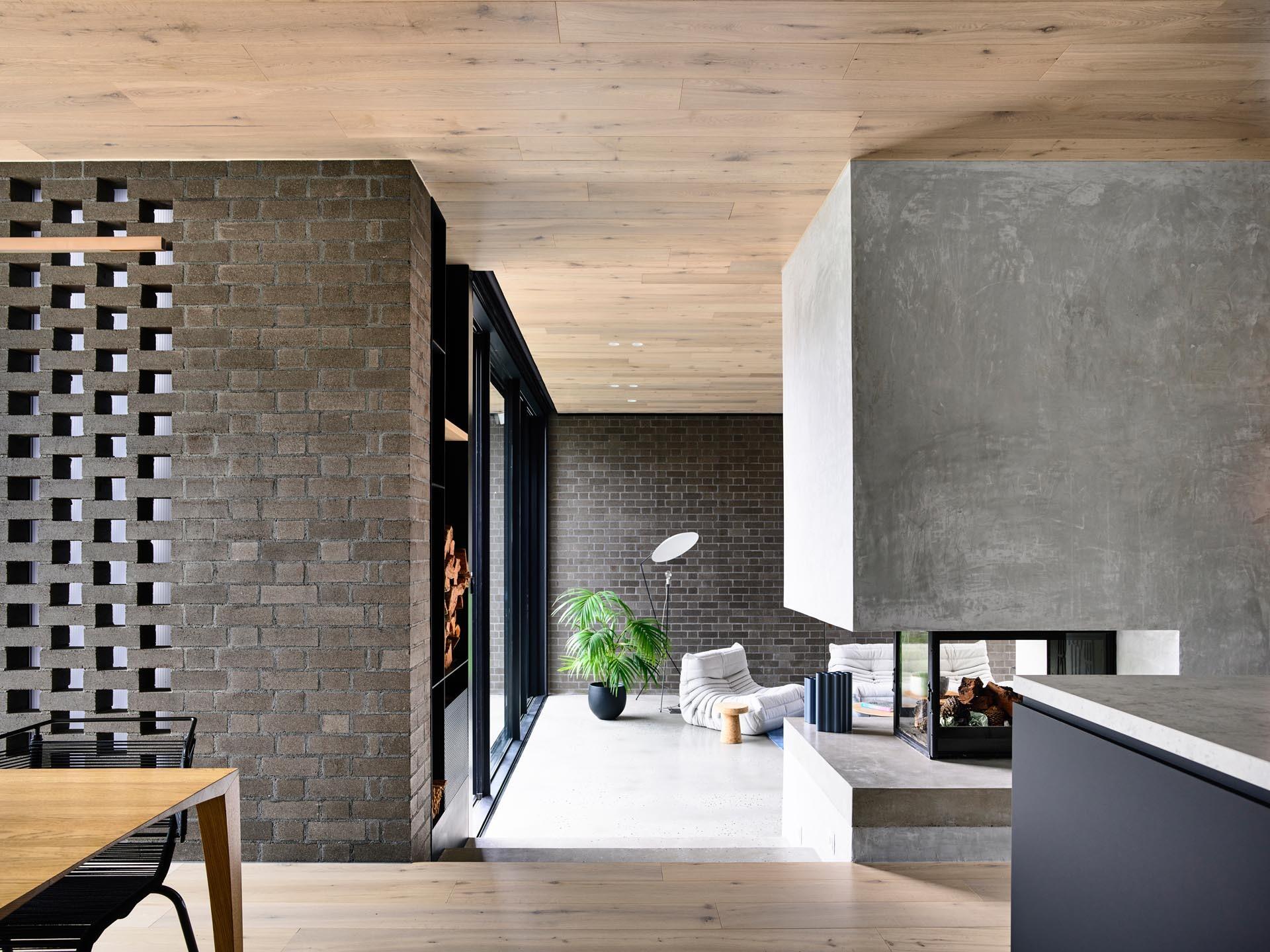
Inside the addition, the material palette continues with exposed dark brick walls and a warm timber ceiling. One of the standout features is a see-through fireplace positioned between the kitchen and living room, creating a shared focal point that connects both spaces visually and functionally.
This detail adds a layer of cohesion to the open-plan layout, allowing each area to feel distinct while still part of a larger whole.
A Kitchen That Anchors the Space
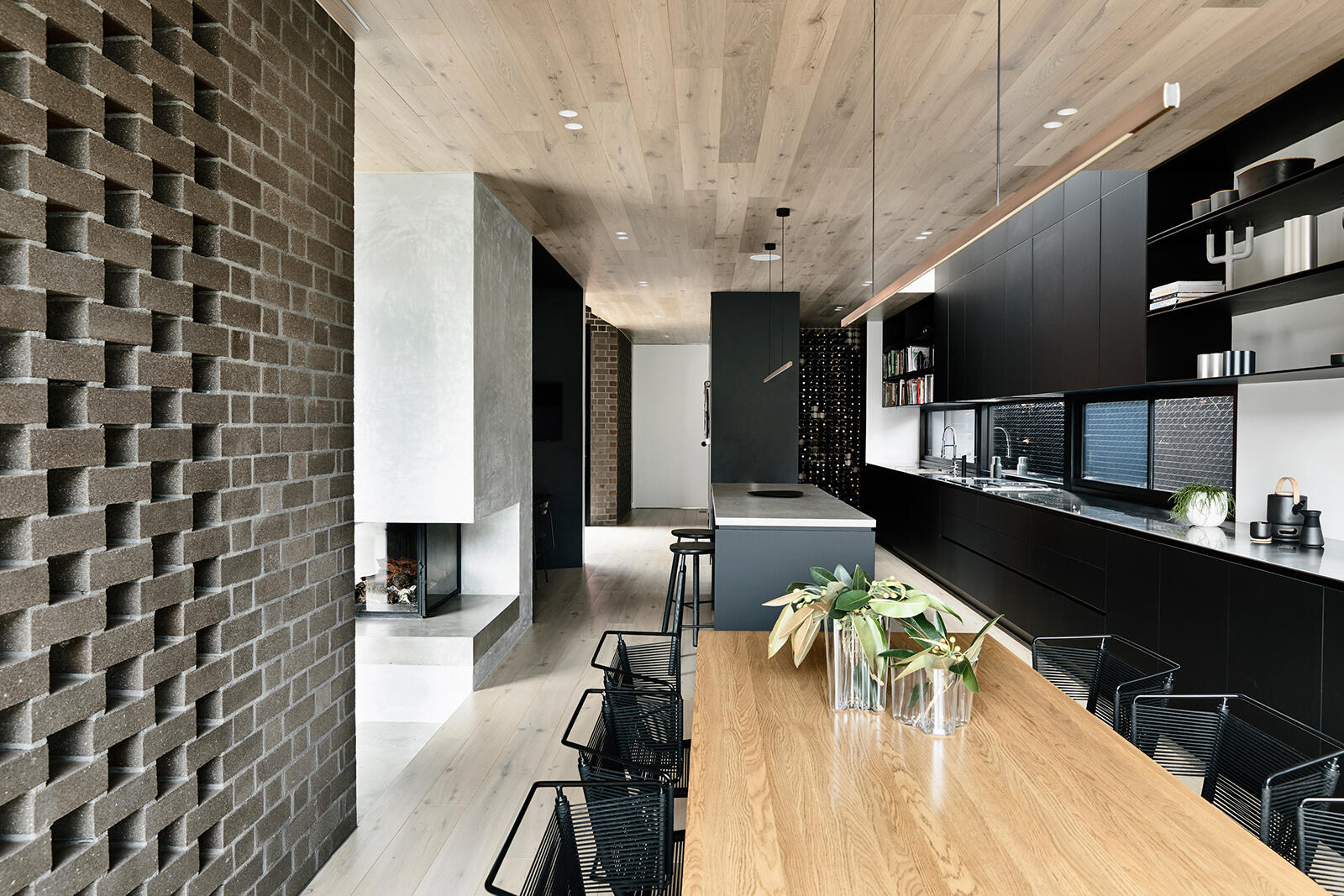
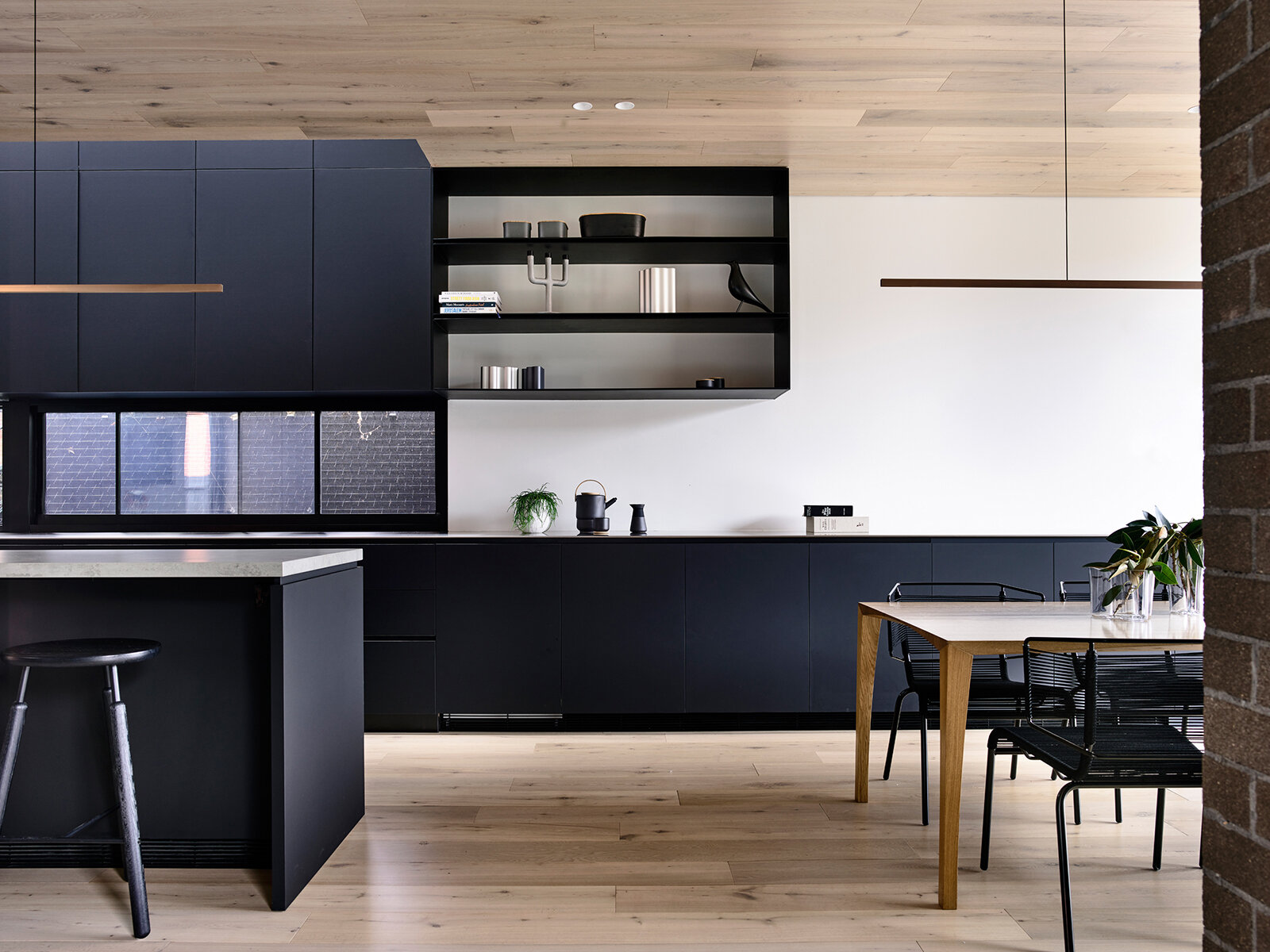
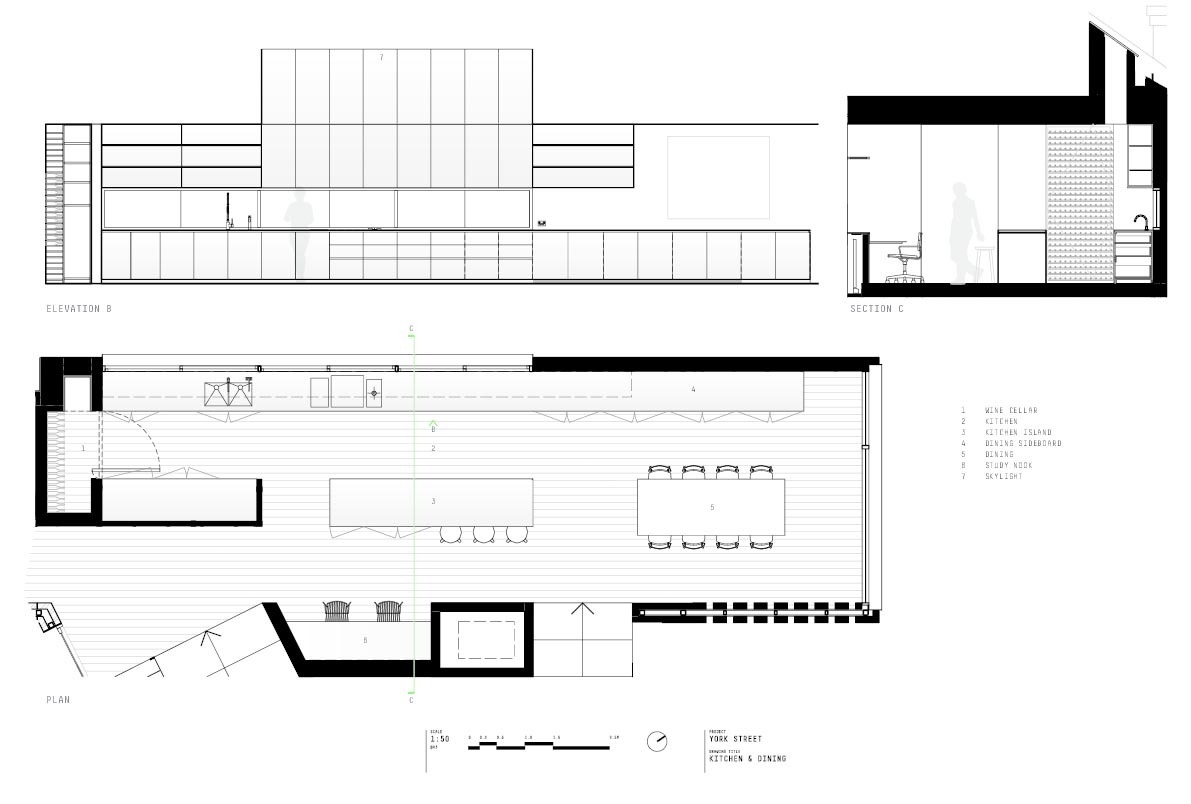
The kitchen and dining area share a single open zone, but it’s the matte black cabinetry that immediately draws attention. Running along the wall, the cabinetry creates a bold backdrop that defines the kitchen without the need for physical separation. This approach keeps the layout open while still giving the kitchen a strong presence within the overall space.
A Bedroom Designed Around Light
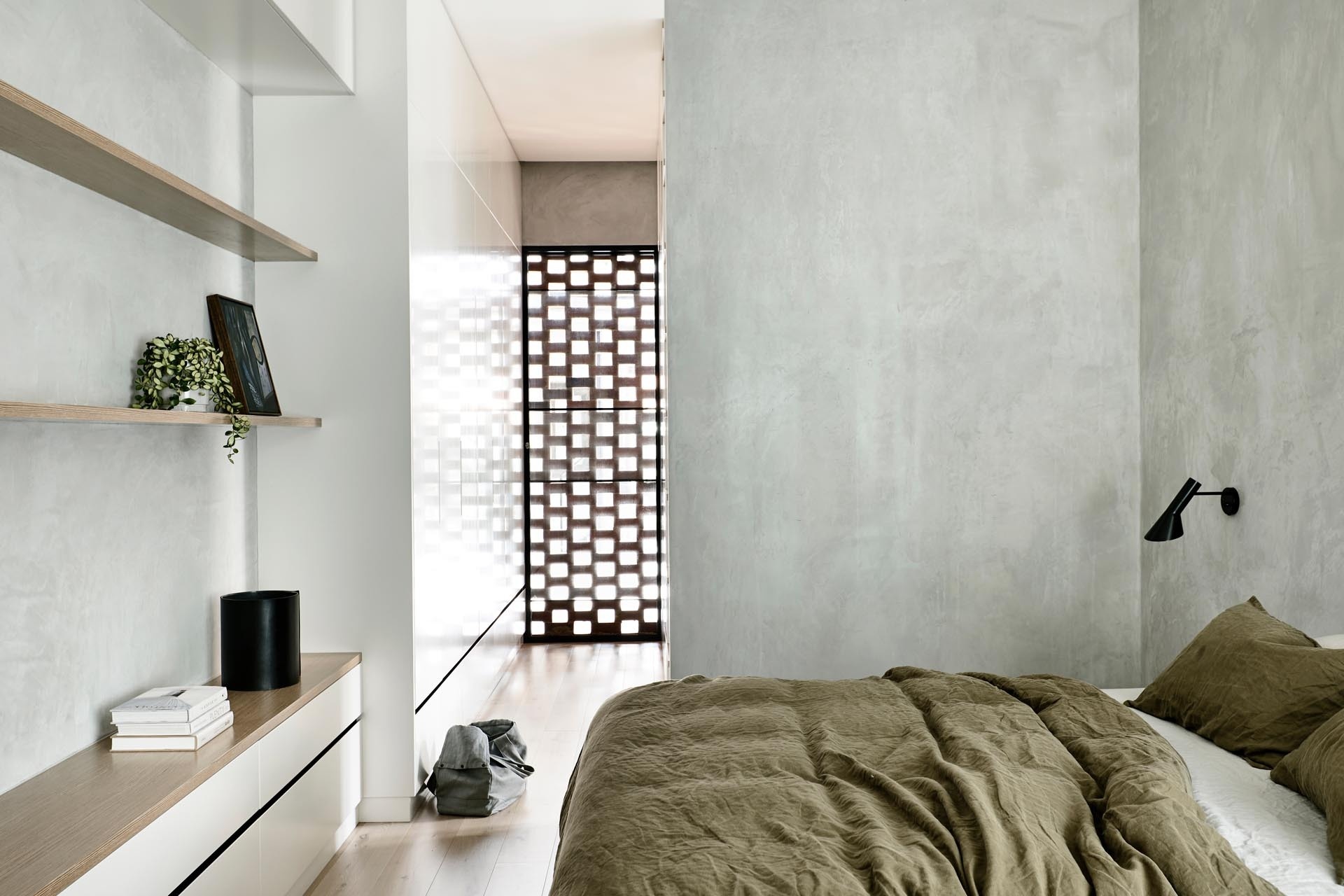
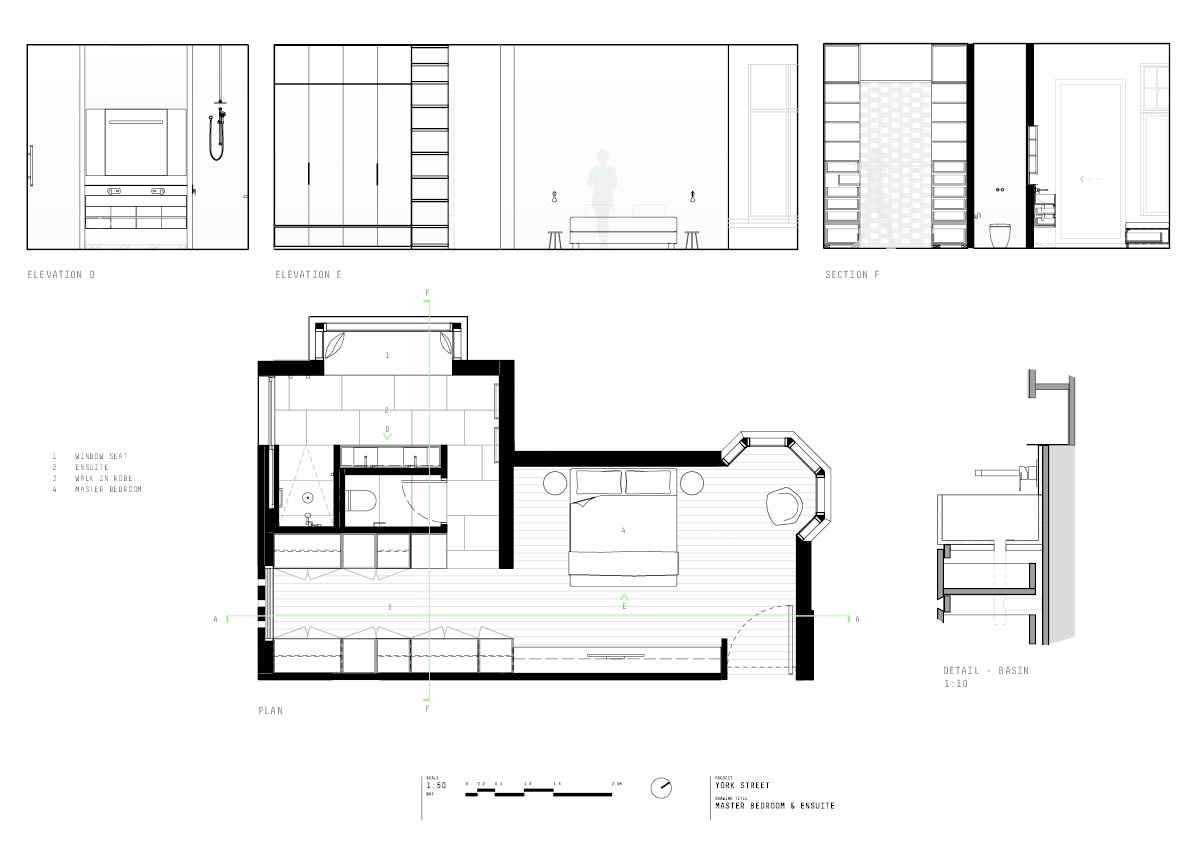
The new bedroom follows a simpler design language, but still makes a strong impact through its use of light. At the end of the closet, hit-miss brickwork allows filtered light to enter, adding texture and subtle variation to the room.
An Ensuite That Extends Outdoors
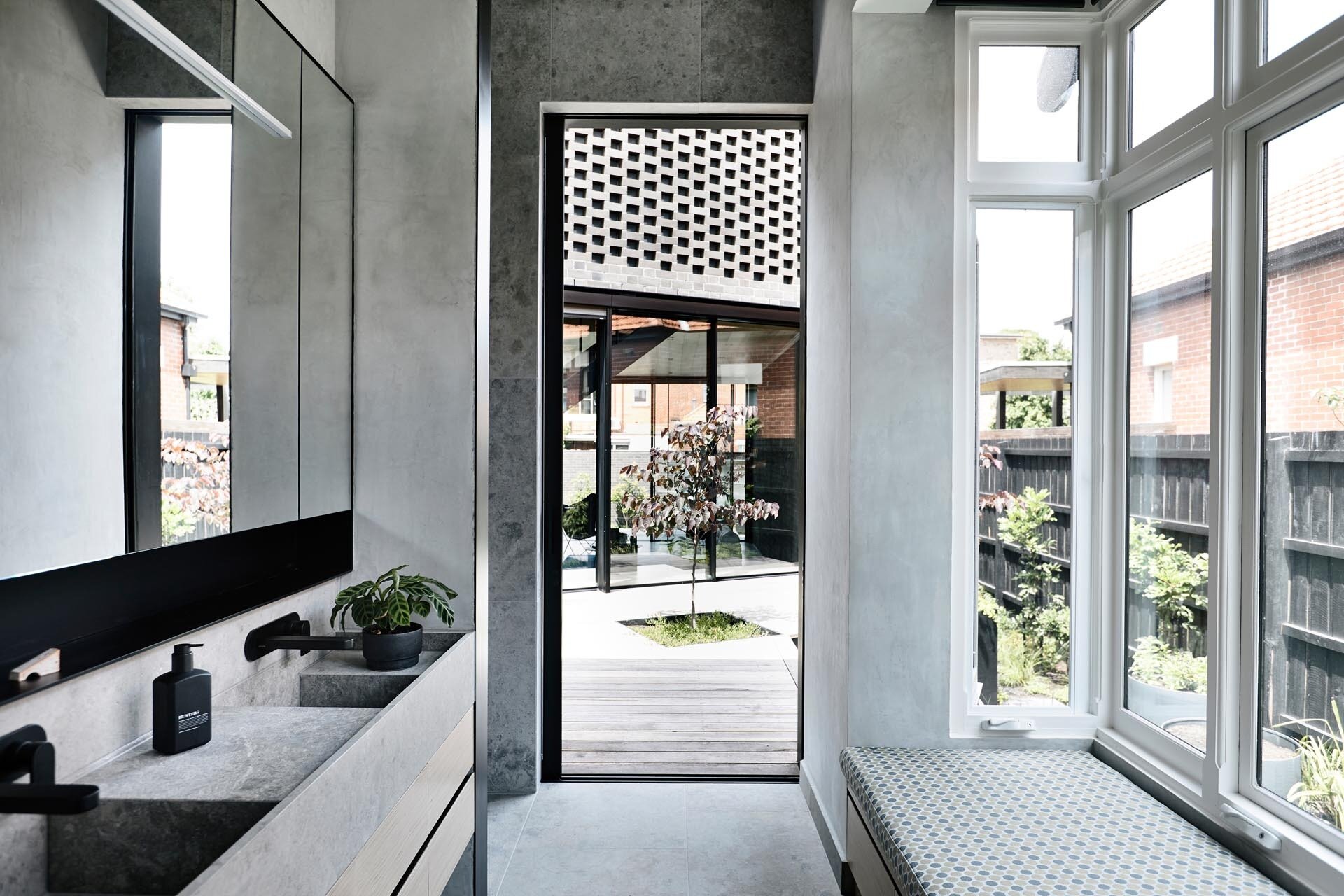
The bedroom connects to an en-suite bathroom that opens directly onto a courtyard. This outdoor space plays a key role in linking the original home with the new addition, acting as a physical and visual connector between the two. The transition from interior to exterior feels seamless, adding another layer to how the spaces interact.
An Origami-Inspired Ceiling
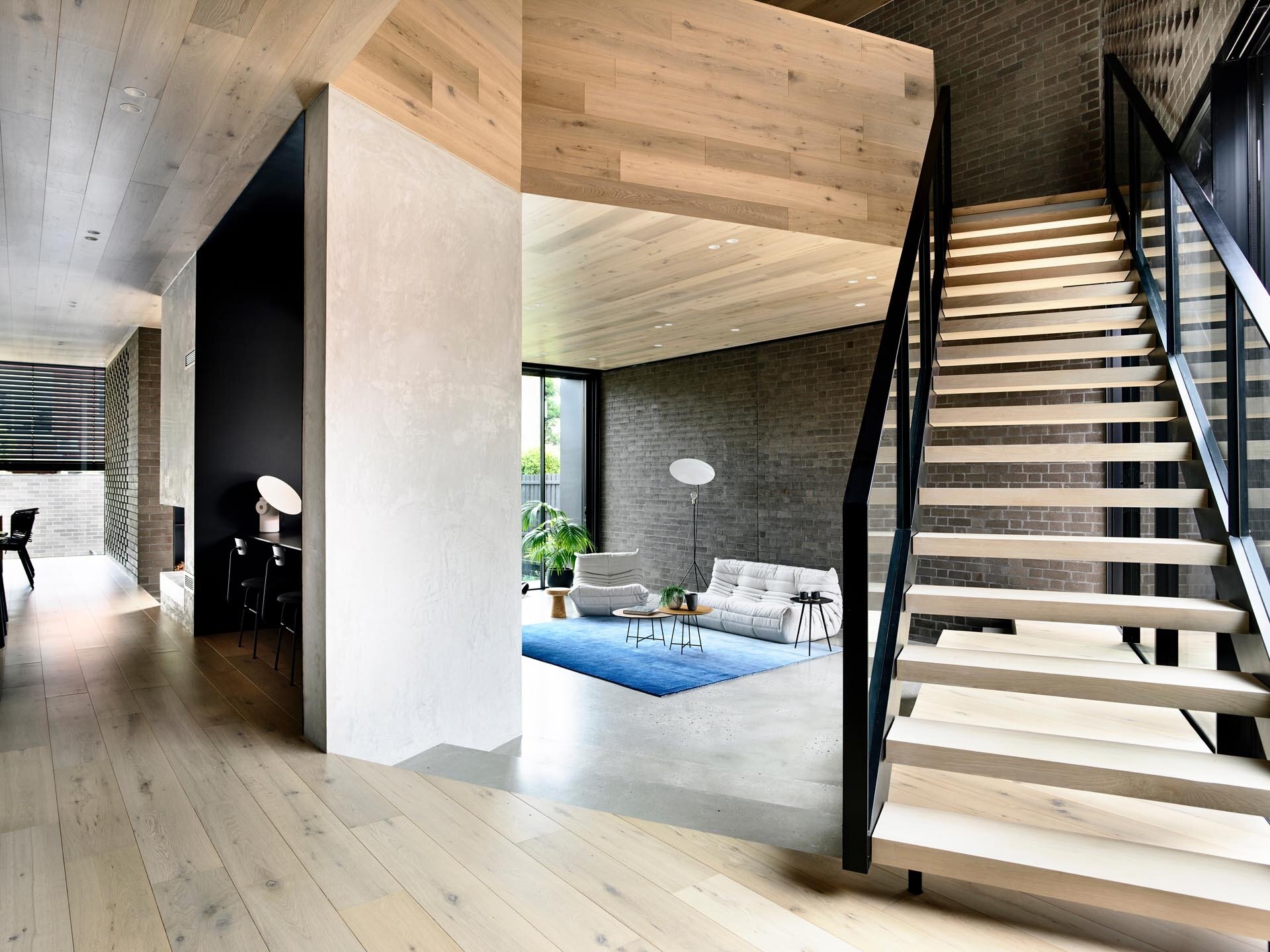
At the heart of the addition is a staircase that immediately captures attention. Positioned beneath a folding, origami-inspired timber-lined ceiling, it becomes one of the defining features of the interior.
The combination of form and material turns a functional element into something more expressive, adding movement and structure to the space.
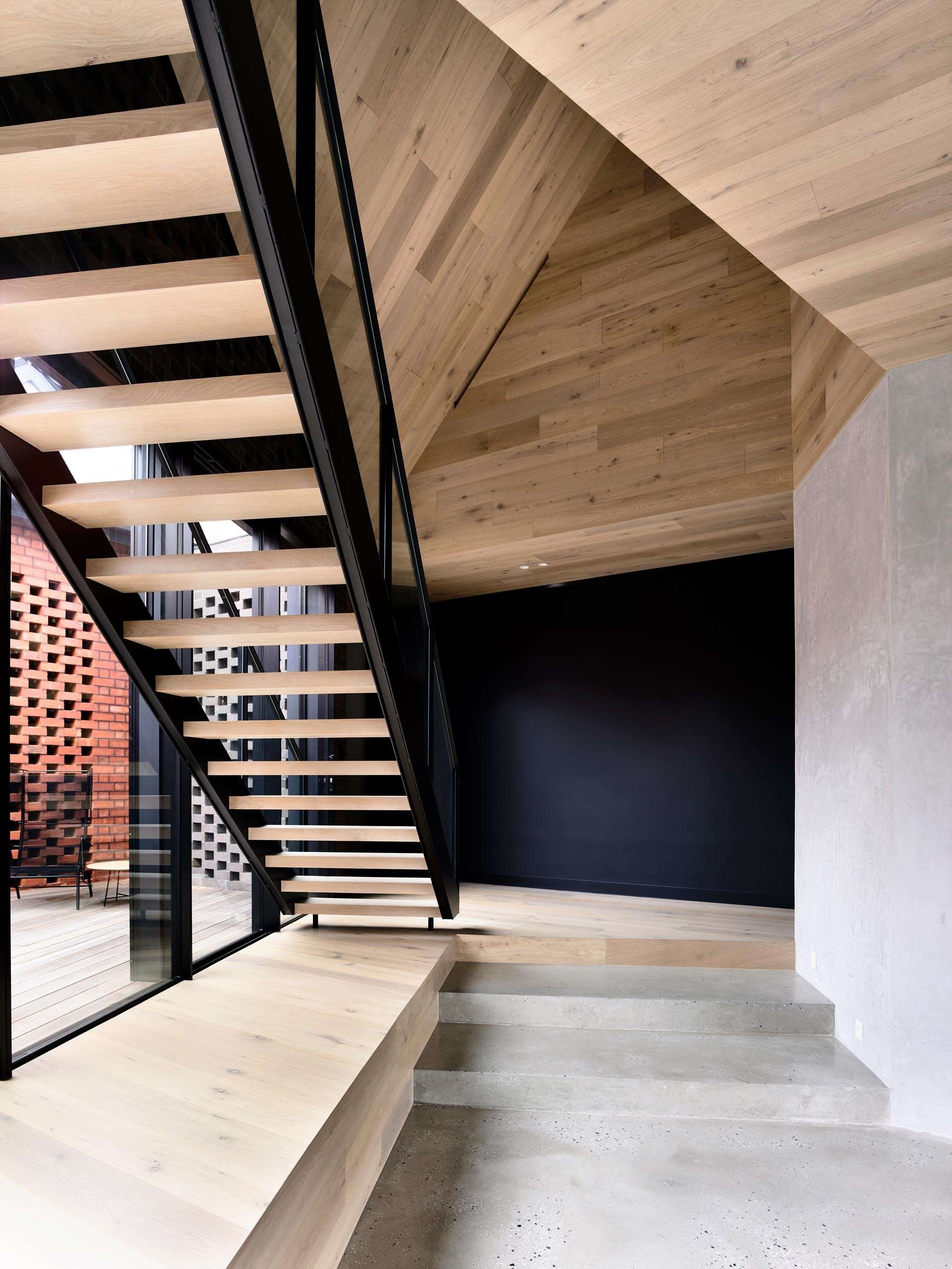
A Study Nook Framed by Geometry
At the top of the stairs, a custom-designed study nook makes use of the angled ceiling above. The geometry of the roofline becomes part of the experience, giving the small workspace a distinct identity.
From this vantage point, the design of the ceiling is fully visible, turning what could be a simple landing into a memorable part of the home.
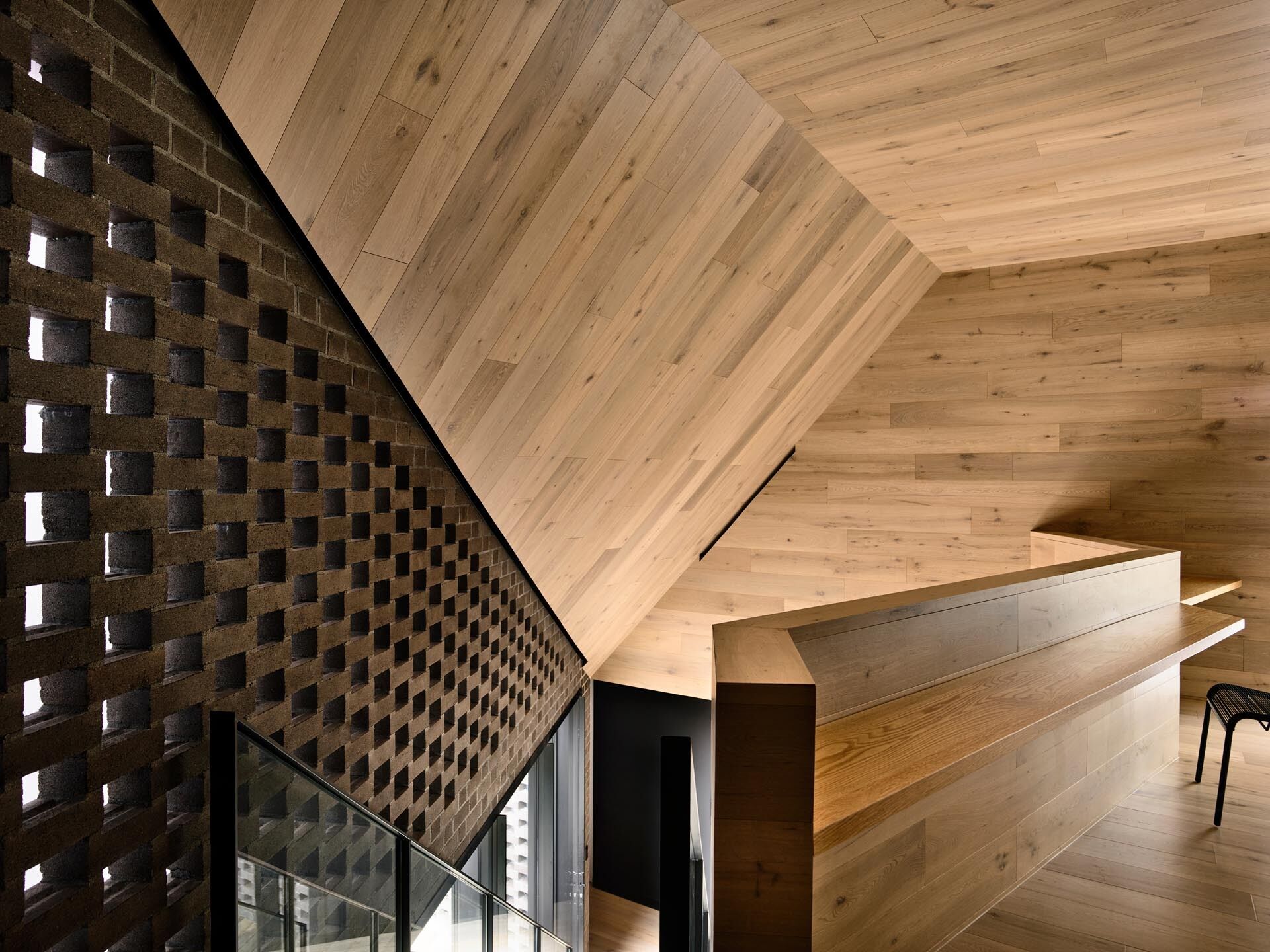
Understanding the Design Through Drawings
A series of architectural drawings reveal how the new addition integrates with the original heritage structure. They show the relationship between the two volumes, as well as how the extension was positioned and constructed alongside the existing home.
These drawings highlight the contrast in form while also explaining how the entire composition comes together as a single project.
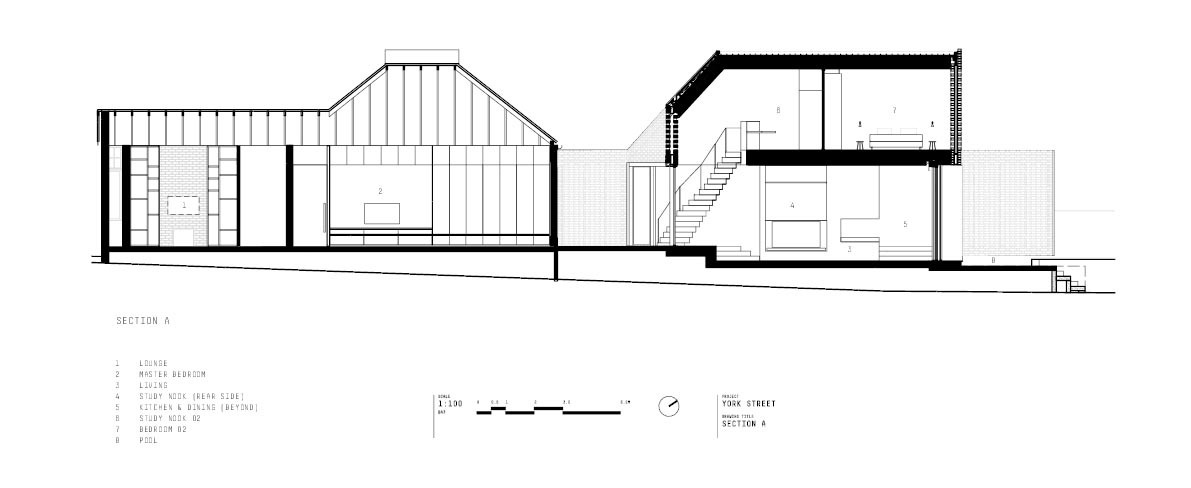
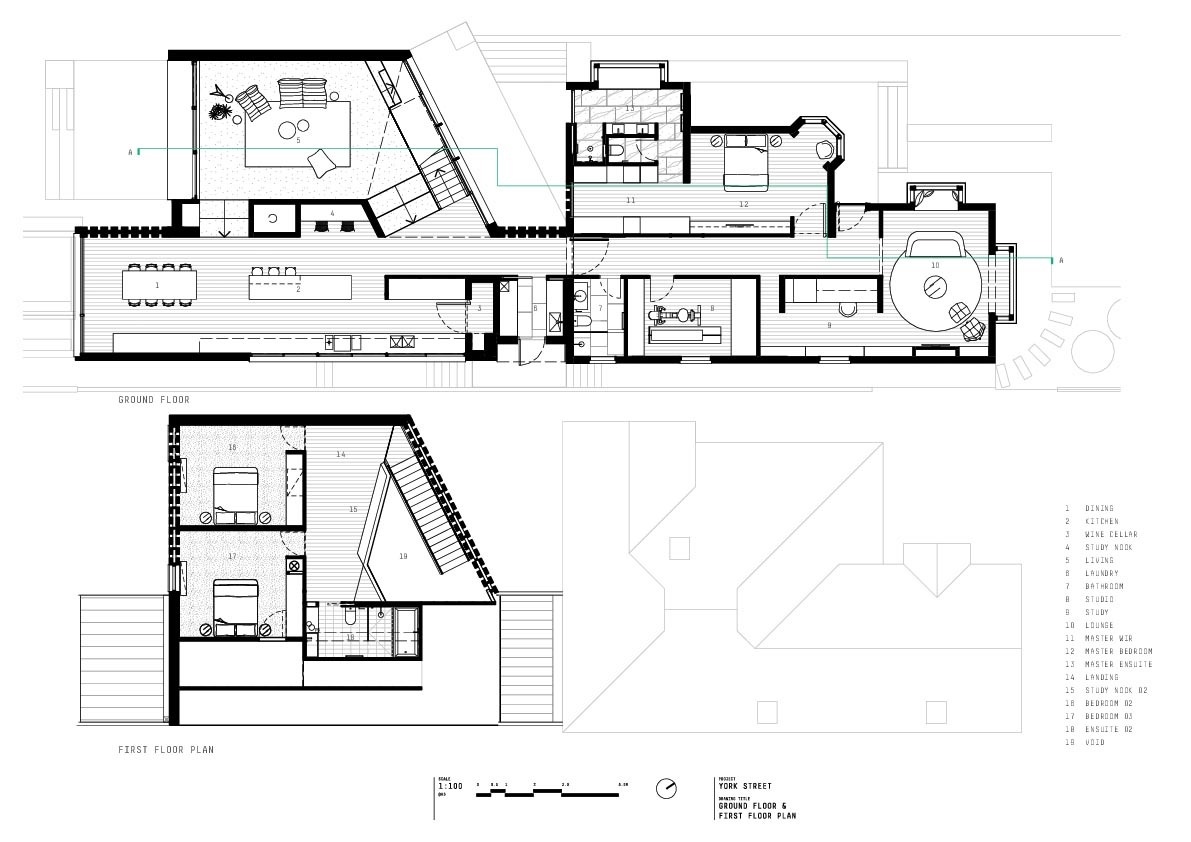
This Melbourne renovation by Jackson Clements Burrows Architects shows how a heritage home can evolve without losing its identity. By pairing a distinct modern addition with the original structure, the project creates a layered living environment that feels both familiar and new.