IED masters deploy design against the loss of common goods
IED MASTERS of arts EVOLVE PRACTICE THROUGH DESIGN X COMMONS
Marking an evolution in how design intervenes within contemporary society, the Master of Arts programs at Istituto Europeo di Design (IED) treat the discipline as a mediator between communities and common goods. Grounded in the understanding of commons as the material and immaterial resources that multiple communities engage with as the collective heritage of humanity, the overarching theme of Design X Commons elevates these graduate thesis projects past formal styling exercises and traditional product development. Combining research alongside speculative design strategies, the emerging designers confront climate vulnerability, urban privatization, labor exploitation, and spatial inequality to reshape collective urban futures.

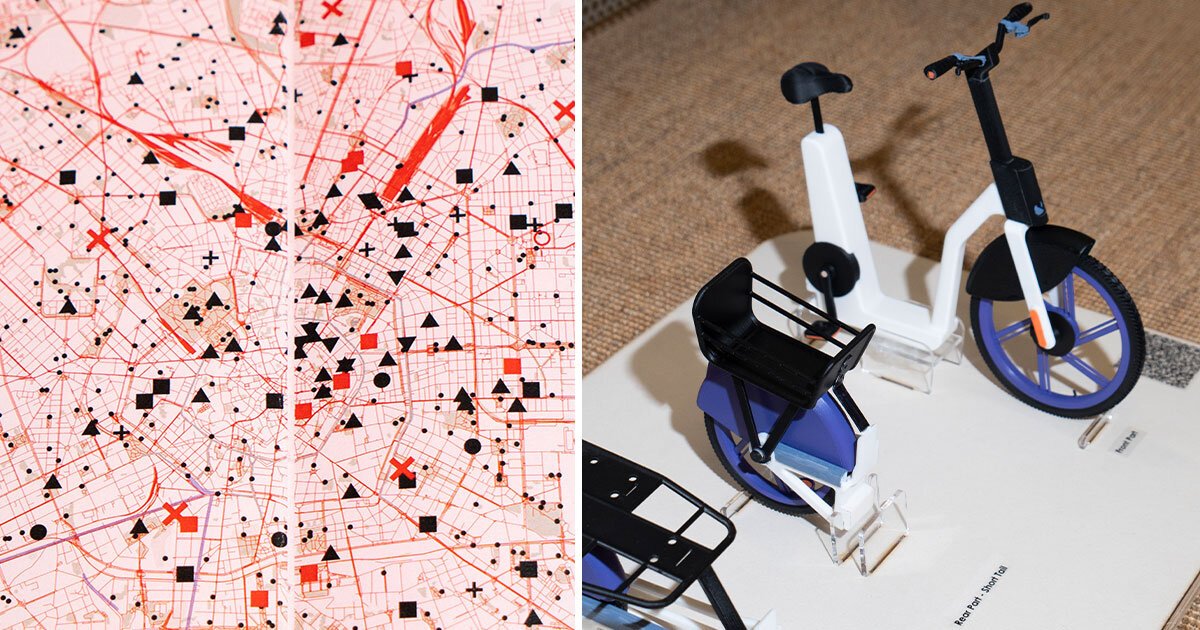
IED Master of Arts Exhibition | all images courtesy of Istituto Europeo di Design (IED)
POSITIONING DESIGNERS AS AGENTS OF SOCIAL EQUALITY
IED structures its two-year Master of Arts programs to foster independent critical thinking in response to systemic global issues. Central to this educational model is the concept of common goods, encompassing both natural resources such as water, land, and air, as well as immaterial assets like cultural knowledge, open data, and public spaces. The institute positions the management of these resources, known as commoning, as a fundamental design practice. Through research, material testing, and participatory methods, graduates learn to challenge traditional industrial habits and build regenerative models that support both human and environmental ecosystems.

IED’s Master of Arts graduates present their thesis projects under the umbrella ‘Design X Commons’
GRADUATE PROJECTS SPOTLIGHT ECOLOGICAL REGENERATION AND SOCIAL equality
This design approach materializes in graduate work that targets specific local vulnerabilities while developing frameworks adaptable to global conditions. At IED Milano, Michele Martelloni addresses coastal erosion along the Apuan shoreline with ‘Systemic Reef’. The project transforms the industrial tetrapod into a porous, modular structure designed to dissipate wave energy and encourage marine life colonisation. The designer integrates waste marble powder from local quarries into a structural mixture, establishing a five step protocol for systemic coastal management.

‘Systemic Reef’ operates at the intersection of territorial knowledge, material research, and ecological urgency
In the Visual Communication program, Ana Sofia Camacho created ‘En la Olla. Narratives of Joyful Subversion’, a project that explores cultural identity. She focuses on everyday Latin American expressions, showing how creative play acts as a form of resistance against long standing social challenges. Camacho organizes these visual symbols into a series of objects that function as a collection and a manifesto, elevating local traditions and street culture into recognized, valuable contributions to modern creative practice.

the project reinterprets structural violence while challenging the dehumanizing legacy of colonization
At the intersection of spatial politics and climate adaptation, Olga Matsiuk developed ‘Where did water go? Urban bathing as a Common Practice Responding to an Ecosocial Emergency in Milan’ to address urban water accessibility. Framing water access as a basic human right, the project centers on a temporary public bathing festival around an underused fountain in Piazza Kaisserlian. The installation brings community members together to enjoy shared space while advocating for the reopening of nearby closed public swimming facilities.

framing public water access, the thesis acts as a political gesture of resistance against urban privatization
At IED Roma, Elena Bicocchi targets neighborhood revitalisation through ‘Strada domestica’, a project created for the Tuscolano district in collaboration with local authorities. The design reclaims Via Valesio from automobile traffic, expanding the comfortable qualities of domestic space into the street. Opening connected residential courtyards to community activities and adding flexible public structures called habitats, Bicocchi turns a vacant roadway into a resident-managed civic center.

through community-focused design, the ‘Strada domestica’ revitalizes a marginalized urban area
In the Textile Design program at IED Firenze, Ruby Berryman developed ‘Invisible Hands’ to examine human rights within Tuscany’s luxury fashion supply chain. The research highlights labor conditions affecting immigrant workers behind the Made in Italy label. To address these issues directly, Berryman created Mani Visibili, an online platform offering legal guidance, union resources, and a secure space for worker organizing.

the project ‘Invisible Hands’ reveals the complex social dynamics shaping contemporary fashion manufacturing
Focusing on geographic migration, Anna Leccese created ‘Punto di Ritorno’ within the IED Torino Interaction Design program to explore youth movement between southern and northern Italy. The project examines young people from Puglia who moved away for study or work and are considering moving back. The platform addresses the complex process shaped by personal desires, uncertainties, and career expectations, guiding individuals through well informed transitions back to their home region.

‘Punto di Ritorno’ examines the spatial and social conditions that enable displaced youth to return to their hometown
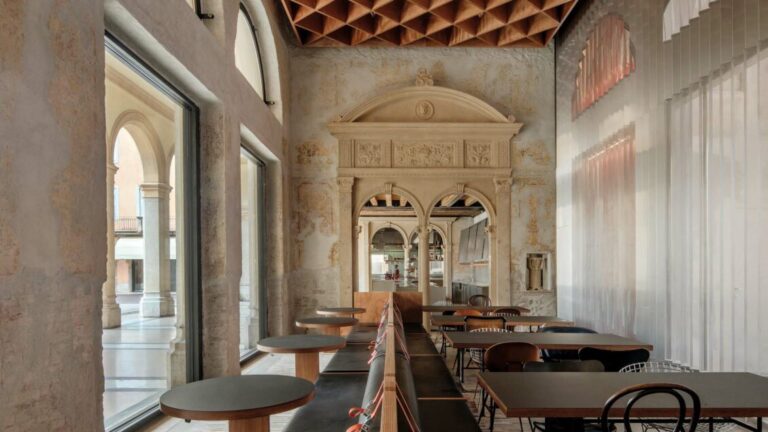
Virginia Urro responds to the urban housing crisis with ‘COHO MUNITY’, an interior design project based at IED Torino. The proposal converts the disused Manifattura di Moncalieri industrial site into an accessible, flexible cohousing ecosystem. Retrofitting existing building stock instead of constructing new facilities, Urro integrates shared domestic spaces and modular living units designed to reduce urban isolation and lower environmental impact.

transforming a disused industrial building into a housing scheme, ‘COHO MUNITY’ prioritizes shared spaces
project info:
theme: Design x Common
organization: Istituto Europeo di Design (IED) | @ied_official
programs: Master of Arts
projects and designers: ‘Systemic Reef’ by Michele Martelloni | Product Design Program; ‘En la Olla. Narratives of Joyful Subversion’ by Ana Sofia Camacho | Visual Communication Program; ‘Where did water go? Urban bathing as a Common Practice Responding to an Ecosocial Emergency in Milan’ by Olga Matsiuk | Interior Design Program; ‘Strada domestica’ by Elena Bicocchi | Design for Public Spaces Program; ‘Invisible Hands’ by Ruby Berryman | Textile Design Program; ‘Punto di Ritorno’ by Anna Leccese | Interaction Design Program; ‘COHO MUNITY’ by Virginia Urro | Interior Design Program.